需
Xū — Waiting
upper trigram
坎Water (Danger)lower trigram
乾Heaven (Strong)The Judgment
有孚。光亨貞吉。利涉大川。
Character-by-character gloss
Modern Interpretation
This isn't passive hoping—it's knowing the goal is certain and letting events ripen. Inner certainty creates the light that guides you through. When you're this grounded, even crossing dangerous waters becomes possible.
The Image
雲上於天,需。君子以飲食宴樂。
Character-by-character gloss
Modern Interpretation
Clouds rise toward heaven—rain will come, but not yet. Nothing to do but wait. So eat, drink, be cheerful. Anxiety doesn't speed the rain. The person of character knows when action is useless and relaxes accordingly.
「雲上於天,需。君子以飲食宴樂。」雲升到天上——雨會來,但還沒來。什麼都做不了,只能等。那就吃飯,喝酒,放鬆。知道什麼時候行動是沒用的,然後真的停下來——這也是一種修養。
The Six Lines
First (Bottom) Line
初九 需于郊。利用恆。无咎。
Modern Interpretation
You're waiting in the open field, far from danger. Stay with your regular routines. Nothing dramatic required yet—just consistency. No blame in this.
Second Line
九二 需于沙。小有言。終吉。
Modern Interpretation
Waiting on the sand now—closer to the water, closer to danger. Some talk, some criticism. Ignore it. Stay patient and the outcome will be good.
Third Line
九三 需于泥。致寇至。
Modern Interpretation
You've waded into the mud. Now the enemy notices you. By acting prematurely, you've attracted exactly what you feared. Caution here is critical.
Fourth Line
六四 需于血。出自穴。
Modern Interpretation
You're in the pit. Blood. This is life-or-death now. The only move is to get out, not to fight. Sometimes survival means accepting the situation's gravity and withdrawing.
Fifth Line
九五 需于酒食。貞吉。
Modern Interpretation
Waiting amid food and drink—a pause in the danger. Don't mistake temporary comfort for final safety, but do accept nourishment when it comes. Perseverance still required.
Sixth (Top) Line
上六 入于穴。有不速之客三人來。敬之終吉。
Modern Interpretation
You fall into the pit anyway. Three uninvited guests arrive—the danger you waited to avoid. Treat them with respect. The situation can still resolve well if you maintain dignity.
Yilin Verse
From the Forest of Changes (焦氏易林) — 需 Xū (Waiting)
久旱三年,草木不生。粢盛空之,無以供靈。
Drought for three long years; grass and trees do not grow. The grain vessels stand empty; there is nothing to offer the spirits.
Full explanation
Clouds above heaven, yet no rain falls — Waiting doubled upon itself. A drought of three years scorches the earth: grasses and grain refuse to grow, the ritual vessels stand empty, and there is nothing to offer the spirits. This is the nightmare inversion of the hexagram's own image, which promises that the gentleman may eat, drink, and feast in ease. When waiting yields nothing, even the sacred bond between human and heaven frays — without grain, no sacrifice; without sacrifice, no communion with the divine. The same pattern repeating produces stagnation, not renewal. Xu upon Xu warns that patience without agency becomes paralysis.
Masterpiece
A work of art reflecting this hexagram's essence
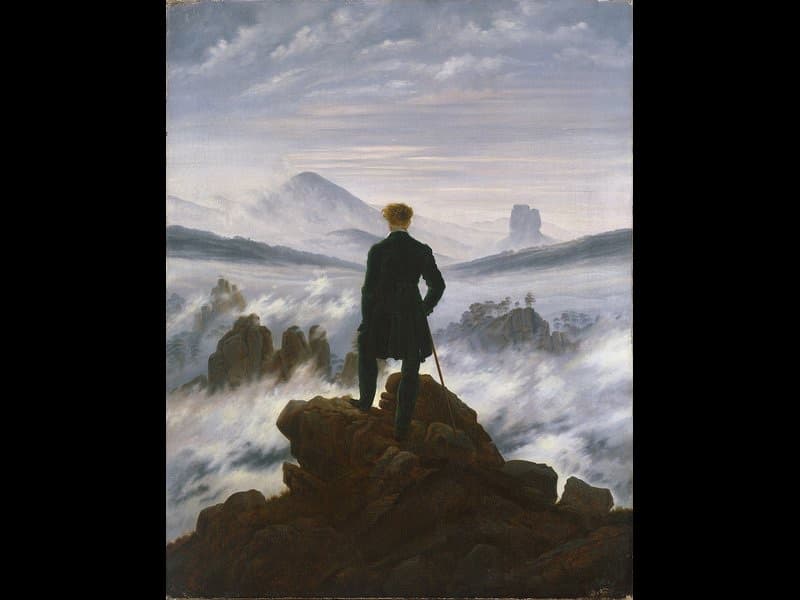
Wanderer above the Sea of Fog
Caspar David Friedrich, 1818
Friedrich's Romantic painting shows a figure standing above fog-shrouded peaks, waiting and contemplating. The wanderer cannot proceed through the obscured landscape and must pause for clarity to emerge.
Wilhelm Commentary
Richard Wilhelm's classic translation and interpretation
The Judgment
Waiting is not mere empty hoping. It has the inner certainty of reaching the goal. Such certainty alone gives that light which leads to success. This leads to the perseverance that brings good fortune and bestows power to cross the great water. One is faced with a danger that has to be overcome. Weakness and impatience can do nothing. Only a strong man can stand up to his fate, for his inner security enables him to endure to the end. This strength shows itself in uncompromising truthfulness [with himself]. It is only when we have the courage to face things exactly as they are, without any sort of self-deception or illusion, that a light will develop out of events, by which the path to success may be recognized. This recognition must be followed by resolute and persevering action. For only the man who goes to meet his fate resolutely is equipped to deal with it adequately. Then he will be able to cross the great water–that is to say, he will be capable of making the necessary decision and of surmounting the danger.
The Image
When clouds rise in the sky, it is a sign that it will rain. There is nothing to do but to wait until after the rain falls. It is the same in life when destiny is at work. We should not worry and seek to shape the future by interfering in things before the time is ripe. We should quietly fortify the body with food and drink and the mind with gladness and good cheer. Fate comes when it will, and thus we are ready.
First (Bottom) Line
The danger is not yet close. One is still waiting on the open plain. Conditions are still simple, yet there is a feeling of something impending. One must continue to lead a regular life as long as possible. Only in this way does one guard against a premature waste of strength, keep free of blame and error that would become a source of weakness later on.
Second Line
The danger gradually comes closer. Sand is near the bank of the river, and the water means danger. Disagreements crop up. General unrest can easily develop in such times, and we lay the blame on one another. He who stays calm will succeed in making things go well in the end. Slander will be silenced if we do not gratify it with injured retorts.
Third Line
Mud is no place for waiting, since it is already being washed by the water of the stream. Instead of having gathered strength to cross the stream at one try, one has made a premature start that has got him no farther than the muddy bank. Such an unfavorable position invites enemies from without, who naturally take advantage of it. Caution and a sense of the seriousness of the situation are all that can keep one from injury.
Fourth Line
The situation is extremely dangerous. It is of utmost gravity now–a matter of life and death. Bloodshed seems imminent. There is no going forward or backward; we are cut off as if in a pit. Now we must simply stand fast and let fate take its course. This composure, which keeps us from aggravating the trouble by anything we might do, is the only way of getting out of the dangerous pit.
Fifth Line
Even in the midst of danger there come intervals of peace when things go relatively well. If we possess enough inner strength, we shall take advantage of these intervals to fortify ourselves for renewed struggle. We must know how to enjoy the moment without being deflected from the goal, for perseverance is needed to remain victorious. This is true in public life as well; it is not possible to achieve everything all at once. The height of wisdom is to allow people enough recreation to quicken pleasure in their work until the task is completed. Herein lies the secret of the whole hexagram. It differs from Chin OBSTRUCTION (39), in the fact that in this instance, while waiting, we are sure of our cause and therefore do not lose the serenity born of inner cheerfulness.
Sixth (Top) Line
The waiting is over; the danger can no longer be averted. One falls into the pit and must yield to the inevitable. Everything seems to have been in vain. But precisely in this extremity things take an unforeseen turn. Without a move on one's own part, there is outside intervention. At first one cannot be sure of its meaning: is it rescue or is it destruction? A person in this situation must keep his mind alert and not withdraw into himself with a sulky gesture of refusal, but must greet the new turn with respect. Thus he ultimately escapes the danger, and all goes well. Even happy turns of fortune often come in a form that at first seems strange to us.