歸妹
Guī Mèi — The Marrying Maiden
upper trigram
震Thunder (Movement)lower trigram
兌Lake (Joyful)The Judgment
征凶。无攸利。
Character-by-character gloss
Modern Interpretation
Undertakings bring misfortune. Nothing that would further. A girl taken into the family but not as the chief wife must behave with special caution and reserve. She must not take it upon herself to supplant the mistress of the house—that would mean disorder and untenable relationships. While legally regulated relationships evince a fixed connection between duties and rights, relationships based on personal inclination depend entirely on tactful reserve. Affection as the principle of relatedness is of the greatest importance in all relationships.
The Image
澤上有雷,歸妹。君子以永終知敝。
Character-by-character gloss
Modern Interpretation
Thunder over the lake. Understand the transitory in the light of the eternity of the end. Thunder stirs the water of the lake, which follows it in shimmering waves—symbolizing the girl who follows the man of her choice. But every relationship bears the danger of wrong turns leading to endless misunderstandings. Constantly remain mindful of the end. If we drift along, we come together and are parted as the day determines. But if you fix your mind on an end that endures, you succeed in avoiding the reefs that confront closer relationships.
「澤上有雷,歸妹。」雷震動湖水,水波跟隨它閃爍——象徵女子跟隨她選擇的男子。但每一段關係都潛藏著走錯方向的危險,導致無盡的誤解。象辭說君子「永終知敝」——時刻記住結局,才能理解破敗。如果隨波逐流,聚散由天。如果心裡有一個持久的目標,就能避開親密關係中的暗礁。
The Six Lines
First (Bottom) Line
初九 歸妹以娣。跛能履。征吉。
Modern Interpretation
The marrying maiden as a concubine. A lame man who is able to tread. Undertakings bring good fortune. A girl entering a family with the consent of the wife will not rank outwardly as her equal but will withdraw modestly into the background. If she understands how to fit herself into the pattern of things, her position will be entirely satisfactory. Though hampered by this status, as if lame, she can nevertheless accomplish something through kindliness of nature.
Second Line
九二 眇能視。利幽人之貞。
Modern Interpretation
A one-eyed man who is able to see. The perseverance of a solitary one furthers. A girl married to a man who has disappointed her. Man and wife ought to work together like a pair of eyes. Here the girl is left behind in loneliness; the man of her choice has become unfaithful or has died. But she does not lose the inner light of loyalty. Though the other eye is gone, she maintains her loyalty even in loneliness.
Third Line
六三 歸妹以須。反歸以娣。
Modern Interpretation
The marrying maiden as a slave. She marries as a concubine. A girl in a lowly position who finds no husband may still win shelter as a concubine. This pictures a person who longs too much for joys that cannot be obtained in the usual way. They enter a situation not altogether compatible with self-esteem. Neither judgment nor warning—merely laying bare the actual situation for everyone to draw a lesson.
Fourth Line
九四 歸妹愆期。遲歸有時。
Modern Interpretation
The marrying maiden draws out the allotted time. A late marriage comes in due course. The girl is virtuous. She does not wish to throw herself away and allows the customary time for marriage to slip by. There is no harm in this; she is rewarded for her purity and, even though belatedly, finds the husband intended for her.
Fifth Line
六五 帝乙歸妹。其君之袂。不如其娣之袂良。月幾望吉。
Modern Interpretation
The sovereign I gave his daughter in marriage. The embroidered garments of the princess were not as gorgeous as those of the serving maid. The moon that is nearly full brings good fortune. A girl of aristocratic birth who marries a man of modest circumstances and understands how to adapt with grace. Free of vanity of outer adornment, forgetting her rank, she takes a place below her husband, just as the moon before it is quite full does not directly face the sun.
Sixth (Top) Line
上六 女承筐无實。士刲羊无血。无攸利。
Modern Interpretation
The woman holds the basket, but there are no fruits in it. The man stabs the sheep, but no blood flows. Nothing that acts to further. The ritual is only superficially fulfilled—an empty basket, a sheep already dead. Solely to preserve forms. This impious, irreverent attitude bodes no good for a marriage.
Yilin Verse
From the Forest of Changes (焦氏易林) — 歸妹 Guī Mèi (Marrying Maiden)
堅冰黃裳,鳥哀悲愁。不見白粒,但覩藜蒿。數驚鷙鳥,為我心憂。
Hard ice and yellow earth; the bird mourns in sorrow. No white grain to be seen, only goosefoot and wormwood. Startled again and again by birds of prey; this weighs upon my heart.
Full explanation
Thunder over lake returns to itself: the Marrying Maiden unchanged, its pattern intensified. Hard ice and yellow garments; birds cry in sorrow. No white grain is visible, only goosefoot and mugwort. Raptors startle repeatedly, becoming a constant worry. The verse is bleak beyond measure: winter ice, mourning birds, famine food replacing grain, and predators circling overhead. When the hexagram transforms into itself, there is no movement, no escape, no resolution. The maiden's subordinate position deepens into permanence. The yellow garment evokes the Kun hexagram's line-six warning, while the ice recalls the hexagram's opening: 'Treading on frost, solid ice will come.' From the Marrying Maiden to itself, the pattern locks into place without relief.
Masterpiece
A work of art reflecting this hexagram's essence
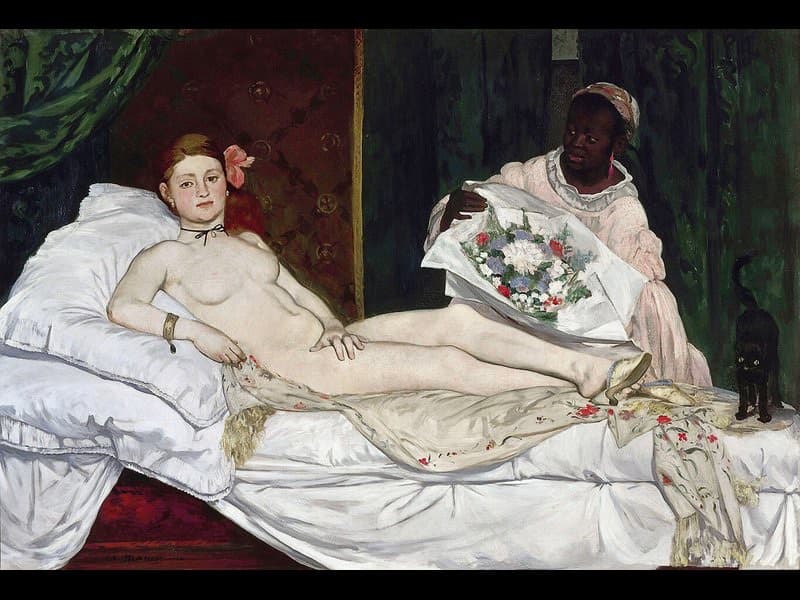
Olympia
Édouard Manet, 1863
Manet's controversial modernist work depicts a reclining nude woman, likely a courtesan, gazing directly at the viewer while a servant presents flowers from a client. The painting scandalized the 1865 Paris Salon by presenting transactional intimacy without idealization. This unequal relationship and subordinate position connect to The Marrying Maiden's theme of improper or secondary unions.
Wilhelm Commentary
Richard Wilhelm's classic translation and interpretation
The Judgment
A girl who is taken into the family, but not as the chief wife, must behave with special caution and reserve. She must not take it upon herself to supplant the mistress of the house, for that would mean disorder and lead to untenable relationships. The same is true of all voluntary relationships between human beings. While legally regulated relationships evince a fixed connection between duties and rights, relationships based on personal inclination depend in the long run entirely on tactful reserve. Affection as the essential principle of relatedness is of the greatest importance in all relationships in the world. For the union of heaven and earth is the origin of the whole of nature. Among human beings likewise, spontaneous affection is the all-inclusive principle of union.
The Image
Thunder stirs the water of the lake, which follows it in shimmering waves. This symbolizes the girl who follows the man of her choice. But every relationship between individuals bears within it the danger that wrong turns may be taken, leading to endless misunderstandings and disagreements. Therefore it is necessary constantly to remain mindful of the end. If we permit ourselves to drift along, we come together and are parted again as the day may determine. If on the other hand a man fixes his mind on an end that endures, he will succeed in avoiding the reefs that confront the closer relationships of people.
First (Bottom) Line
The princes of ancient China maintained a fixed order of rank among the court ladies, who were subordinated to the queen as are younger sisters to the eldest. Frequently they came from the family of the queen, who herself led them to her husband. The meaning is that a girl entering a family with the consent of the wife will not rank outwardly as the equal of the latter but will withdraw modestly into the background. However, if she understands how to fit herself into the pattern of things, her position will be entirely satisfactory, and she will feel sheltered in the love of the husband to whom she bears children. The same meaning is brought out in the relationships between officials. A man may enjoy the personal friendship of a prince and be taken into his confidence. Outwardly this man must keep tactfully in the background behind the official ministers of state, but, although he is hampered by this status, as if he were lame, he can nevertheless accomplish something through the kindliness of his nature.
Second Line
Here the situation is that of a girl married to a man who has disappointed her. Man and wife ought to work together like a pair of eyes. Here the girl is left behind in loneliness; the man of her choice either has become unfaithful or has died. But she does not lost the inner light of loyalty. Thought the other eye is gone, she maintains her loyalty even in loneliness.
Third Line
A girl who is in a lowly position and finds no husband may, in some circumstances, still win shelter as a concubine. This pictures the situation of a person who longs too much for joys that cannot be obtained in the usual way. He enters upon a situation not altogether compatible with self-esteem. Neither judgment nor warning is added to this line; it merely lays bare the actual situation, so that everyone may draw a lesson from it.
Fourth Line
The girl is virtuous. She does not wish to throw herself away, and allows the customary time for marriage to slip by. However, there is no harm in this; she is rewarded for her purity and, even though belatedly, finds the husband intended for her.
Fifth Line
The sovereign I is T'ang the Completer. This ruler decreed that the imperial princesses should be subordinated to their husbands in the same manner as other women (cf. Hexagram 11, six in the fifth place). The emperor does not wait for a suitor to woo his daughter but gives her in marriage when he sees fit. Therefore it is in accord with custom for the girl's family to take the initiative here. We see here a girl of aristocratic birth who marries a man of modest circumstances and understands how to adapt herself with grace to the new situation. She is free of all vanity of outer adornment, and forgetting her rank in her marriage, takes a place below that of her husband, just as the moon, before it is quite full, does not directly face the sun.
Sixth (Top) Line
At the sacrifice to the ancestors, the woman had to present harvest offerings in a basket, while the man slaughtered the sacrificial animal with his own hand. Here the ritual is only superficially fulfilled; the woman takes an empty basket and the man stabs a sheep slaughtered beforehand–solely to preserve the forms. This impious, irreverent attitude bodes no good for a marriage.