旅
Lǚ — The Wanderer
upper trigram
離Fire (Clinging)lower trigram
艮Mountain (Stillness)The Judgment
小亨。旅貞吉。
Character-by-character gloss
Modern Interpretation
Success through smallness. Persistence brings good fortune to the wanderer. When a stranger, you should not be gruff or overbearing. Having no large circle of acquaintances, don't give yourself airs. Be cautious and reserved—this protects from evil. Be obliging toward others and win success. A wanderer has no fixed abode; home is the road. Take care to remain upright and steadfast, sojourning only in proper places, associating only with good people. Then you have good fortune and can go your way unmolested.
The Image
山上有火,旅。君子以明慎用刑,而不留獄。
Character-by-character gloss
Modern Interpretation
Fire on the mountain. Be clear-minded and cautious in imposing penalties, and protract no lawsuits. When grass on a mountain takes fire, there is bright light, but the fire does not linger—it travels on to new fuel. Penalties and lawsuits should be like this: a quickly passing matter, not dragged out indefinitely. Prisons should be temporary lodging places, not dwelling places.
「山上有火,旅。」山上的草著火,有明亮的光,但火不會停留在一個地方——它繼續移動,尋找新的燃料。象辭說君子「明慎用刑,而不留獄」——刑罰和訴訟應該是快速過去的事情,不能無限期拖延。監獄應該是臨時的住所,而不是久居之地。這個道理用在很多事情上都對——不該留的就不要留。
The Six Lines
First (Bottom) Line
初六 旅瑣瑣。斯其所取災。
Modern Interpretation
If the wanderer busies himself with trivial things, he draws down misfortune upon himself. A wanderer should not demean himself or busy himself with inferior things along the way. The humbler and more defenseless your outward position, the more you should preserve inner dignity. A stranger mistaken if hoping to find friendly reception through jokes and buffoonery. The result will be only contempt and insulting treatment.
Second Line
六二 旅即次。懷其資。得童僕貞。
Modern Interpretation
The wanderer comes to an inn. He has his property with him. He wins the steadfastness of a young servant. This wanderer is modest and reserved. Not losing touch with their inner being, they find a resting place. In the outside world, they don't lose the liking of other people, so all further them. They can acquire property and moreover win the allegiance of a faithful servant—a thing of inestimable value to a wanderer.
Third Line
九三 旅焚其次。喪其童僕。貞厲。
Modern Interpretation
The wanderer's inn burns down. He loses the steadfastness of his young servant. Danger. A truculent stranger doesn't know how to behave properly. Meddling in affairs and controversies that don't concern them, they lose their resting place. Treating their servant with aloofness and arrogance, they lose the man's loyalty. When a stranger in a strange land has no one left on whom to rely, the situation becomes very dangerous.
Fourth Line
九四 旅于處。得其資斧。我心不快。
Modern Interpretation
The wanderer rests in a shelter. He obtains his property and an ax. My heart is not glad. A wanderer who knows how to limit desires outwardly, though inwardly strong and aspiring. Finding at least a place of shelter, succeeding in acquiring property, but not secure. Always on guard, ready to defend with arms. Hence not at ease—persistently conscious of being a stranger in a strange land.
Fifth Line
六五 射雉。一矢亡。終以譽命。
Modern Interpretation
He shoots a pheasant. It drops with the first arrow. In the end this brings both praise and office. Traveling statesmen would introduce themselves to local princes with the gift of a pheasant. You shoot one, killing it at the first shot. Thus you find friends who praise and recommend you, and in the end the prince accepts you and confers an office. If you know how to meet the situation and introduce yourself in the right way, you may find a circle of friends and a sphere of activity even in a strange country.
Sixth (Top) Line
上九 鳥焚其巢。旅人先笑後號咷。喪牛于易。凶。
Modern Interpretation
The bird's nest burns up. The wanderer laughs at first, then must needs lament and weep. Through carelessness he loses his cow. Misfortune. Loss of one's resting place. If heedless and imprudent when building the nest, this misfortune may overtake you. If you let yourself go, laughing and jesting, forgetting that you are a wanderer, you will later have cause to weep and lament. Through carelessness losing your cow—your modesty and adaptability—evil will result.
Yilin Verse
From the Forest of Changes (焦氏易林) — 旅 Lǚ (Wanderer)
羅網四張,鳥无所翔。征伐困極,飢窮不食。
Nets are spread in every direction; the bird has nowhere to fly. Campaign and conquest pushed to the limit; starving and destitute, without food.
Full explanation
Fire on the mountain returns to fire on the mountain — The Wanderer doubled. Nets spread in all four directions; the bird has nowhere to fly. The traveler, exhausted from endless campaigns, starves in his own destitution. This is the wanderer's condition taken to its logical extreme: when source and target are the same hexagram, the pattern intensifies without relief. No transformation occurs; the fire simply burns on the same mountain. From The Wanderer to The Wanderer, there is no escape from transience. The nets are ubiquitous, the hunger permanent, and the warfare without end. The only shift possible is in the wanderer's stance: even trapped, one may choose how to bear the unbearable.
Masterpiece
A work of art reflecting this hexagram's essence
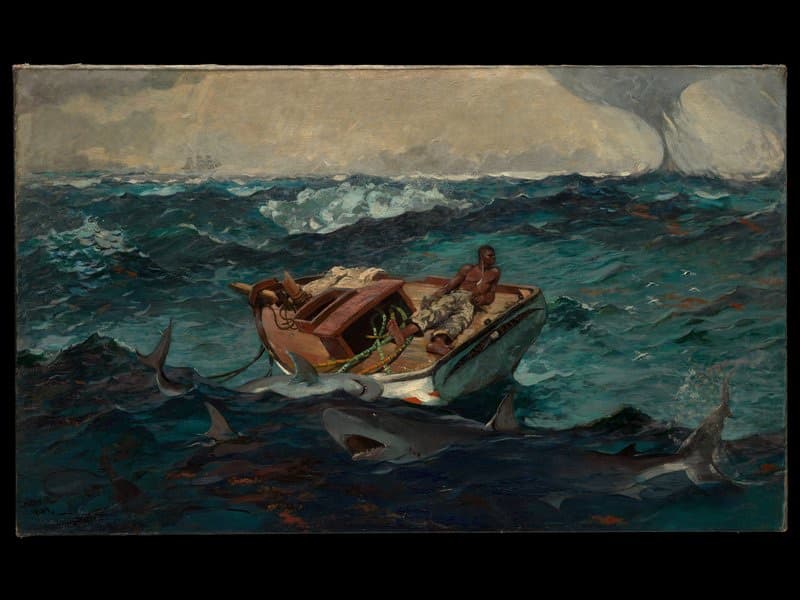
The Gulf Stream
Winslow Homer, 1899; reworked by 1906
American realist Homer depicts a Black sailor stranded on a dismasted boat surrounded by sharks in tropical waters. The man lies isolated far from home, adrift without anchor or destination, embodying The Wanderer's precarious existence. Homer painted this after extended time in the Bahamas, capturing the vulnerability of displacement and temporary passage through hostile territory.
Wilhelm Commentary
Richard Wilhelm's classic translation and interpretation
The Judgment
When a man is a wanderer and stranger, he should be not be gruff nor overbearing. He has no large circle of acquaintances, therefore he should not give himself airs. He must be cautious and reserved; in this way he protects himself from evil. If he is obliging toward others, he wins success. A wanderer has no fixed abode; his home is the road. Therefore he must take care to remain upright and steadfast, so that he sojourns only in the proper places, associating only with good people. Then he has good fortune and can go his way unmolested.
The Image
When grass on a mountain takes fire, there is bright light. However, the fire does not linger in one place, but travels on to new fuel. It is a phenomenon of short duration. This is what penalties and lawsuits should be like. They should be a quickly passing matter, and must not be dragged out indefinitely. Prisons ought to be places where people are lodged only temporarily, as guests are. They must not become dwelling places.
First (Bottom) Line
A wanderer should not demean himself or busy himself with inferior things he meets with along the way. The humbler and more defenseless his outward position, the more should he preserve his inner dignity. For a stranger is mistaken if he hopes to find a friendly reception through lending himself to jokes and buffoonery. The result will be only contempt and insulting treatment.
Second Line
The wanderer here described is modest and reserved. He does not lose touch with his inner being, hence he finds a resting place. In the outside world he does not lose the liking of other people, hence all persons further him, so that he can acquire property. Moreover, he wins the allegiance of a faithful and trustworthy servant–a thing of inestimable value to a wanderer.
Third Line
A truculent stranger does not know how to behave properly. He meddles in affairs and controversies that do not concern him; thus he loses his resting place. He treats his servant with aloofness and arrogance; thus he loses the man's loyalty. When a stranger in a strange land has no one left on whom he can rely, the situation becomes very dangerous.
Fourth Line
This describes a wanderer who knows how to limit his desires outwardly, though he is inwardly strong and aspiring. Therefore he finds at least a place of shelter in which he can stay. He also succeeds in acquiring property, but even with this he is not secure. He must be always on guard, ready to defend himself with arms. Hence he is not at ease. He is persistently conscious of being a stranger in a strange land.
Fifth Line
Traveling statesman were in the habit of introducing themselves to local princes with the gift of a pheasant. Here the wanderer wants to enter the service of a prince. To this end he shoots a pheasant, killing it at the first shot. Thus he finds friends who praise and recommend him, and in the end the prince accepts him and confers an office upon him. Circumstances often cause a man to seek a home in foreign parts. If he knows how to meet the situation and how to introduce himself in the right way, he may find a circle of friends and a sphere of activity even in a strange country.
Sixth (Top) Line
The picture of a bird whose nest burns up indicates loss of one's resting place. This misfortune may overtake the bird if it is heedless and imprudent when building its nest. It is the same with a wanderer. If he lets himself go, laughing and jesting, and forgets that he is a wanderer, he will later have cause to weep and lament. For if through carelessness a man loses his cow–i. e. , his modesty and adaptability–evil will result.