无妄
Wú Wàng — Innocence
upper trigram
乾Heaven (Strong)lower trigram
震Thunder (Movement)The Judgment
元亨利貞。其匪正有眚。不利有攸往。
Character-by-character gloss
Modern Interpretation
Success through what is genuine and unforced. If your motives aren't straight, you'll encounter obstacles. Nothing good comes from ulterior purposes. The natural state—uncalculated, unmanipulated—is the only foundation for lasting success. Deviate from this and the deviation becomes your problem.
The Image
天下雷行,物與無妄。先王以茂對時育萬物。
Character-by-character gloss
Modern Interpretation
Thunder rolls beneath heaven and all things receive their nature without falseness. The ancient kings nourished all beings by aligning with the seasons. You don't force growth; you create conditions for it. This applies equally to crops and character.
天下雷行,萬物得其本性。先王因此「茂對時育萬物」——按照時令養育萬物。不強求生長,只是創造條件。這是農夫的智慧,不是哲學家的。種子該發芽的時候,你攔不住;不該的時候,你推不動。
The Six Lines
First (Bottom) Line
初九 无妄。往吉。
Modern Interpretation
When your impulse is genuine, act on it. The original movement of an honest heart leads toward what's right. No second-guessing needed here.
Second Line
六二 不耕穫。不菑畬。則利有攸往。
Modern Interpretation
Work without calculating the harvest. Clear the ground without planning what you'll plant. When you act without scheming, everything you do furthers. Outcome-fixation is the enemy of good work.
Third Line
六三 无妄之災。或繫之牛。行人之得。邑人之災。
Modern Interpretation
Undeserved disaster strikes. The tethered ox becomes someone else's gain. This happens—external misfortune that has nothing to do with your character. Don't mistake bad luck for punishment.
Fourth Line
九四 可貞。无咎。
Modern Interpretation
Hold to what you are. What truly belongs to you cannot be lost even if you throw it away. Authenticity doesn't require protection; it requires expression. Stay with your own nature and ignore the noise.
Fifth Line
九五 无妄之疾。勿藥有喜。
Modern Interpretation
When illness comes from outside and doesn't take root in your character, let it pass without intervention. Don't make it worse by fighting it. Some problems solve themselves if you stop interfering.
Sixth (Top) Line
上九 无妄。行有眚。无攸利。
Modern Interpretation
The wrong time for action, but you push anyway. When circumstances don't support progress, forcing movement leads nowhere good. Wait for the moment that matches your intention.
Yilin Verse
From the Forest of Changes (焦氏易林) — 無妄 Wú Wàng (Innocence)
夏臺羑里,湯文厄處。皋陶聽理,岐人悅喜。西望華夏,東歸無咎。
Xia Tai and Youli; where Tang and Wen met their trials. Gao Yao judged with discernment; the people of Qi rejoiced. Looking west toward Huaxia; returning east, no fault.
Full explanation
Xiatai and Youli — the prisons where King Tang and King Wen endured unjust captivity before founding their dynasties. Gao Yao, the legendary minister of justice, listens and adjudicates, and the people of Qi rejoice. Looking west toward the central kingdoms, then returning east without blame. From Innocence to Innocence, the self-referential transformation doubles the hexagram's meaning. Tang and Wen suffered innocent misfortune — the very essence of Wuwang — yet their imprisonment became the crucible of dynastic virtue. Gao Yao's just hearing restores order. The verse encodes Wuwang's complete cycle: the innocent suffer, justice eventually prevails, and one returns home without fault.
Masterpiece
A work of art reflecting this hexagram's essence
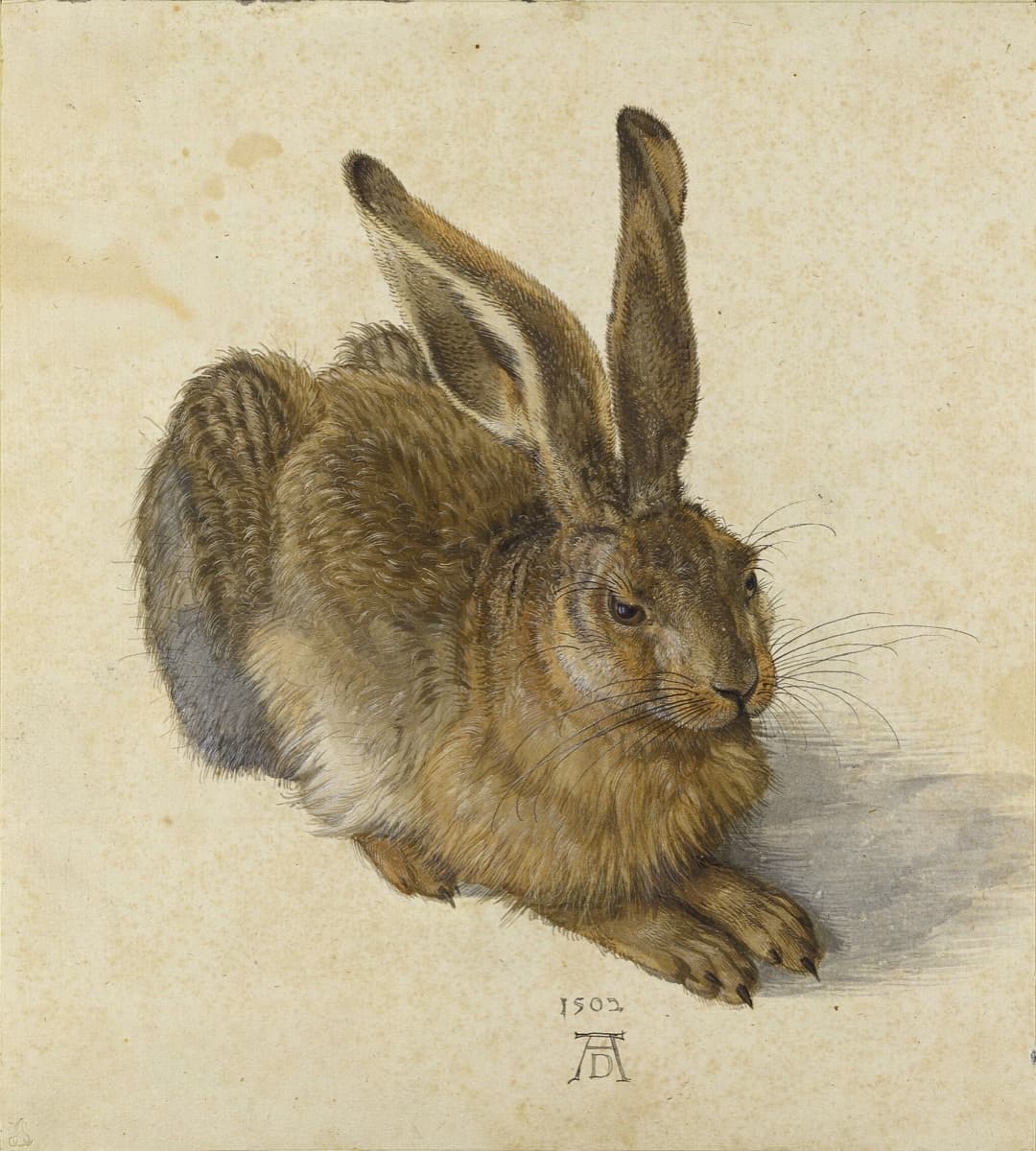
Young Hare
Albrecht Dürer, 1502
Dürer's 1502 watercolor study depicts a hare in naturalistic detail, capturing the animal's alert posture and textured fur. The creature sits in a state of natural being without artifice, embodying the hexagram's theme of innocence and spontaneous action aligned with natural instinct.
Wilhelm Commentary
Richard Wilhelm's classic translation and interpretation
The Judgment
Man has received from heaven a nature innately good, to guide him in all his movements. By devotion to this divine spirit within himself, he attains an unsullied innocence that leads him to do right with instinctive sureness and without any ulterior thought of reward and personal advantage. This instinctive certainty brings about supreme success and "furthers through perseverance". However, not everything instinctive is nature in this higher sense of the word, but only that which is right and in accord with the will of heaven. Without this quality of rightness, an unreflecting, instinctive way of acting brings only misfortune. Confucius says about this: "He who departs from innocence, what does he come to? Heaven's will and blessing do not go with his deeds. "
The Image
In springtime when thunder, life energy, begins to move again under the heavens, everything sprouts and grows, and all beings receive from the creative activity of nature the childlike innocence of their original state. So it is with the good rulers of mankind: drawing on the spiritual wealth at their command, they take care of all forms of life and all forms of culture and do everything to further them, and at the proper time.
First (Bottom) Line
The original impulses of the heart are always good, so that we may follow them confidently, assured of good fortune and achievement of our aims.
Second Line
We should do every task for its own sake as time and place demand and not with an eye to the result. Then each task turns out well, and anything we undertake succeeds.
Third Line
Sometimes undeserved misfortune befalls a man at the hands of another, as for instance when someone passes by and takes a tethered cow along with him. His gain is the owner's loss. In all transactions, no matter how innocent, we must accommodate ourselves to the demands of the time, otherwise unexpected misfortune overtakes us.
Fourth Line
We cannot lose what really belongs to us, even if we throw it away. Therefore we need have no anxiety. All that need concern us is that we should remain true to our own natures and not listen to others.
Fifth Line
An unexpected evil may come accidentally from without. If it does not originate in one's own nature or have a foothold there, one should not resort to external means to eradicate it, but should quietly let nature take its course. Then improvement will come of itself.
Sixth (Top) Line
When, in a given situation, the time is not ripe for further progress, the best thing to do is to wait quietly, without ulterior designs. If one acts thoughtlessly and tries to push ahead in opposition to fate, success will not be achieved.