解
Xiè — Deliverance
upper trigram
震Thunder (Movement)lower trigram
坎Water (Danger)The Judgment
利西南。无所往。其來復吉。有攸往。夙吉。
Character-by-character gloss
Modern Interpretation
The southwest furthers. If there's nowhere left you have to go, return brings good fortune. If something remains to be done, hasten brings good fortune. Tensions ease. Return to ordinary conditions as soon as possible. Don't overdo the triumph—don't push further than necessary. Handle residual matters quickly for a clean sweep. Like rain relieving atmospheric tension, deliverance has a liberating effect. But it's just beginning.
The Image
雷雨作,解。君子以赦過宥罪。
Character-by-character gloss
Modern Interpretation
Thunder and rain set in, clearing the air. Pardon mistakes, forgive misdeeds. Pass over unintentional transgressions like thunder dying away. Wash clean intentional wrongs like rain washing everything pure. Clarity brings deliverance; don't dwell on failings.
「雷雨作,解。君子以赦過宥罪。」雷雨來了,空氣清新了。無心的過失,像雷聲消散那樣放過它。故意的錯誤,像雨水洗淨一切那樣寬恕它。不要糾纏於別人的過錯。清明帶來解脫。
The Six Lines
First (Bottom) Line
初六 无咎。
Modern Interpretation
Without blame. Hindrance past, deliverance come. Recuperate in peace and keep still. Few words needed. This is the right thing when difficulties have been overcome.
Second Line
九二 田獲三狐。得黃矢。貞吉。
Modern Interpretation
Three foxes killed in the field, yellow arrow received. Persistence brings good fortune. Designing flatterers must be removed before deliverance is complete. But use the right weapons—measure and directness. Wholeheartedness develops inner strength that acts against what is false.
Third Line
六三 負且乘。致寇至。貞吝。
Modern Interpretation
Carrying a burden on your back while riding in a carriage—you encourage robbers. Persistence leads to humiliation. Coming from need into comfort, you affect ease that doesn't suit your nature. Carelessness invites theft. Insolence toward superiors and hardness toward inferiors attract attack.
Fourth Line
九四 解而拇。朋至斯孚。
Modern Interpretation
Deliver yourself from your great toe. Then the companion comes whom you can trust. Those who attached through habit must be freed when deliverance calls for deeds. Otherwise, those who share your views mistrust you and stay away.
Fifth Line
六五 君子維有解。吉。有孚于小人。
Modern Interpretation
If only the superior person can deliver himself, good fortune. Prove to inferior people that you are in earnest. They cannot be driven off by external means. Break completely with them in your own mind first. They will see your seriousness and withdraw.
Sixth (Top) Line
上六 公用射隼于高墉之上。獲之无不利。
Modern Interpretation
The prince shoots a hawk on a high wall. He kills it. Everything furthers. A powerful inferior in a high position hinders deliverance, hardened in wickedness. Forcible removal is required. Prepare the means within yourself. Bide your time, then act. Everything goes well.
Yilin Verse
From the Forest of Changes (焦氏易林) — 解 Xiè (Deliverance)
駕行出遊,鳥鬭車前,更相捽滅。兵寇旦來,回車亟還,可以无憂。
Driving out for a journey, birds battle before the chariot, tearing at each other. Soldiers and brigands arrive at dawn; he turns the chariot and races back, and thus avoids all worry.
Full explanation
Thunder over water encounters itself — Deliverance meeting Deliverance. Driving out on a journey, birds fight before the carriage, tearing at each other. Then word comes that soldiers and bandits approach at dawn; one turns the carriage and races home, and thereby avoids worry. The verse dramatizes the instinct for timely retreat: omens appear (fighting birds), danger confirms (approaching troops), and the wise traveler does not hesitate to reverse course. From Deliverance to Deliverance, the pattern doubles rather than transforms. Release from one predicament comes through the release of attachment to the journey itself. Sometimes the most decisive act of deliverance is simply turning around.
Masterpiece
A work of art reflecting this hexagram's essence
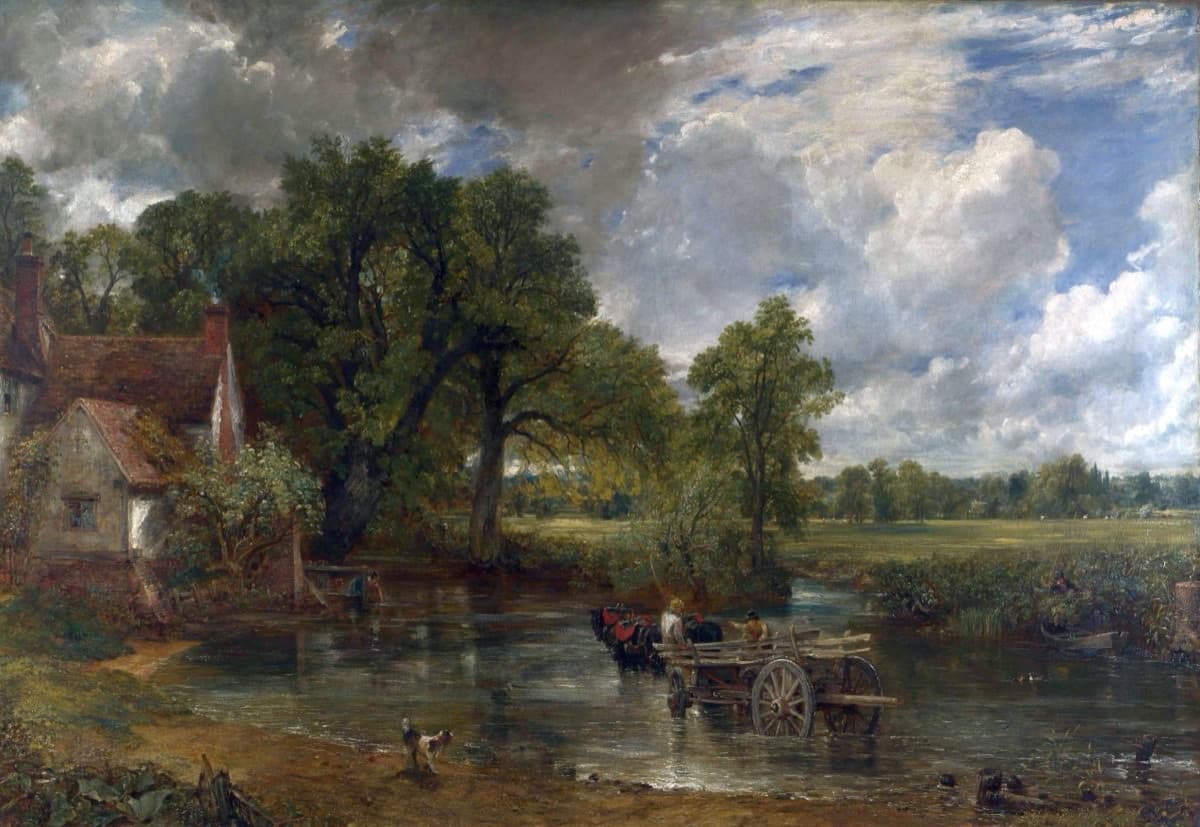
The Hay Wain
John Constable, 1821
Constable painted this bucolic English countryside scene showing a hay cart fording the River Stour in Suffolk. The calm, sunlit landscape depicts agricultural labor resuming after difficulties, illustrating release from tension and the return to productive, unobstructed work.
Wilhelm Commentary
Richard Wilhelm's classic translation and interpretation
The Judgment
This refers to a time in which tensions and complications begin to be eased. At such times we ought to make our way back to ordinary conditions as soon as possible; this is the meaning of "the southwest. " These periods of sudden change have great importance. Just as rain relieves atmospheric tension, making all the buds burst open, so a time of deliverance from burdensome pressure has a liberating and stimulating effect on life. One thing is important, however: in such times we must not overdo our triumph. The point is not to push on farther than is necessary. Returning to the regular order of life as soon as deliverance is achieved brings good fortune. If there are any residual matters that ought to be attended to, it should be done as quickly as possible, so that a clean sweep is made and no retardations occur.
The Image
A thunderstorm has the effect of clearing the air; the superior man produces a similar effect when dealing with mistakes and sins of men that induce a condition of tension. Through clarity he brings deliverance. However, when failings come to light, he does not dwell on them; he simply passes over mistakes, the unintentional transgressions, just as thunder dies away. He forgives misdeeds, the intentional transgressions, just as water washes everything clean.
First (Bottom) Line
In keeping with the situation, few words are needed. The hindrance is past, deliverance has come. One recuperates in peace and keeps still. This is the right thing to do in times when difficulties have been overcome.
Second Line
The image is taken from the hunt. The hunter catches three cunning foxes and receives a yellow arrow as a reward. The obstacles in public life are the designing foxes who try to influence the ruler through flattery. They must be removed before there can be any deliverance. But the struggle must not be carried on with the wrong weapons. The yellow color points to measure and mean in proceeding against the enemy; the arrow signifies the straight course. If one devotes himself wholeheartedly to the task of deliverance, he develops so much inner strength from his rectitude that it acts as a weapon against all that is false and low.
Third Line
This refers to a man who has come out of needy circumstances into comfort and freedom from want. If now, in the manner of an upstart, he tries to take his ease in comfortable surroundings that do not suit his nature, he thereby attracts robbers. If he goes on thus he is sure to bring disgrace upon himself. Confucius says about this line: Carrying a burden on the back is the business of a common man; a carriage is the appurtenance of a man of rank. Now, when a common man uses the appurtenance of a man of rank, robbers plot to take it away from him. If a man is insolent toward those above him and hard toward those below him, robbers plot to attack him. Carelessness in guarding things tempts thieves to steal. Sumptuous ornaments worn by a maiden are an enticement to rob her of her virtue.
Fourth Line
In times of standstill it will happen that inferior people attach themselves to a superior man, and through force of daily habit they may grow very close to him and become indispensable, just as the big toe is indispensable to the foot because it makes walking easier. But when the time of deliverance draws near, with its call to deeds, a man must free himself from such chance acquaintances with whom he has no inner connection. For otherwise the friends who share his views, on whom he could really rely and together with whom he could accomplish something, mistrust him and stay away.
Fifth Line
Times of deliverance demand inner resolve. Inferior people cannot be driven off by prohibitions or any external means. If one desires to be rid of them, he must first break completely with them in his own mind; they will see for themselves that he is in earnest and will withdraw.
Sixth (Top) Line
The hawk on a high wall is the symbol of a powerful inferior in a high position who is hindering the deliverance. He withstands the force of inner influences, because he is hardened in his wickedness. He must be forcibly removed, and this requires appropriate means. Confucius says about this line: