損
Sǔn — Decrease
upper trigram
艮Mountain (Stillness)lower trigram
兌Lake (Joyful)The Judgment
有孚。元吉。无咎可貞。利有攸往。曷之用。二簋可用享。
Character-by-character gloss
Modern Interpretation
Decrease combined with sincerity brings supreme good fortune without blame. Persistence is possible. Two small bowls may be used for the offering. Decrease doesn't necessarily mean something bad. Increase and decrease have their times. Understand the time. Don't cover poverty with empty pretense. If simplicity brings out inner truth, don't be ashamed of it—it's what's needed. Draw on inner strength to compensate for what's lacking in externals. Even with slender means, the heart's sentiment can be expressed.
The Image
山下有澤,損。君子以懲忿窒欲。
Character-by-character gloss
Modern Interpretation
The lake at the mountain's foot evaporates, enriching the mountain with moisture. Control your anger, restrain your instincts. By decreasing the lower powers of the psyche, the higher aspects are enriched.
「山下有澤,損。」湖水蒸發,滋潤山巒。象辭說要懲忿窒欲——控制憤怒,節制慾望。減去心裡那些過剩的東西,上面才有空間生長。很多時候,放下比拿起更難。
The Six Lines
First (Bottom) Line
初九 已事遄往。无咎。酌損之。
Modern Interpretation
Going quickly when your own tasks are finished. Using your strength for others without bragging or making much of it. No blame. But the one being helped must weigh carefully how much they can accept without harming you.
Second Line
九二 利貞。征凶。弗損益之。
Modern Interpretation
Persistence furthers. Undertaking something brings misfortune. Without diminishing yourself, you can still bring increase to others. High-minded self-awareness with no forfeit of dignity. Throwing yourself away to do someone's bidding diminishes you without lasting benefit to them.
Third Line
六三 三人行。則損一人。一人行。則得其友。
Modern Interpretation
When three travel together, one must go. When one travels alone, a companion is found. Very close bonds are possible only between two. Jealousy arises with three. But the lonely one certainly finds a complement.
Fourth Line
六四 損其疾。使遄有喜。无咎。
Modern Interpretation
Decreasing your faults makes others hasten to come and rejoice. No blame. Faults prevent well-disposed people from coming closer. Remove them in humility, and you free those friends from inner pressure. Mutual joy.
Fifth Line
六五 或益之十朋之龜。弗克違。元吉。
Modern Interpretation
Someone indeed increases you. Ten pairs of tortoise shells cannot oppose it. Supreme good fortune. When you are marked by fate for good fortune, it comes without fail. All oracles concur. Fear nothing.
Sixth (Top) Line
上九 弗損益之。无咎。貞吉。利有攸往。得臣无家。
Modern Interpretation
Increased without depriving others. No blame. Persistence brings good fortune. You obtain servants but no longer have a separate home. Everything you accomplish benefits the whole and is available to everyone. Public good, not private advantage.
Yilin Verse
From the Forest of Changes (焦氏易林) — 損 Sǔn (Decrease)
路多枳棘,步刺我足。不利孤客,為心作毒。
The road thick with thorns and brambles; each step pierces my feet. Unfavorable for the lone traveler; it becomes poison to the heart.
Full explanation
Mountain above lake returns to itself — Decrease unchanged, the pattern reinforced. The road bristles with thorns and brambles, each step piercing the foot. This path is no friend to the solitary traveler; it poisons the heart. When Decrease transforms into itself, there is no escape from the dynamic of diminishment. The thorns multiply underfoot, and the lone walker has no companion to share the burden or clear the way. From Decrease to Decrease, the recursion intensifies: what was voluntary sacrifice becomes compulsive self-harm, the road itself becoming hostile. The verse captures the existential weight of isolation within a system designed to take. Solitude makes every thorn sharper; without reciprocity, Decrease is just loss.
Masterpiece
A work of art reflecting this hexagram's essence
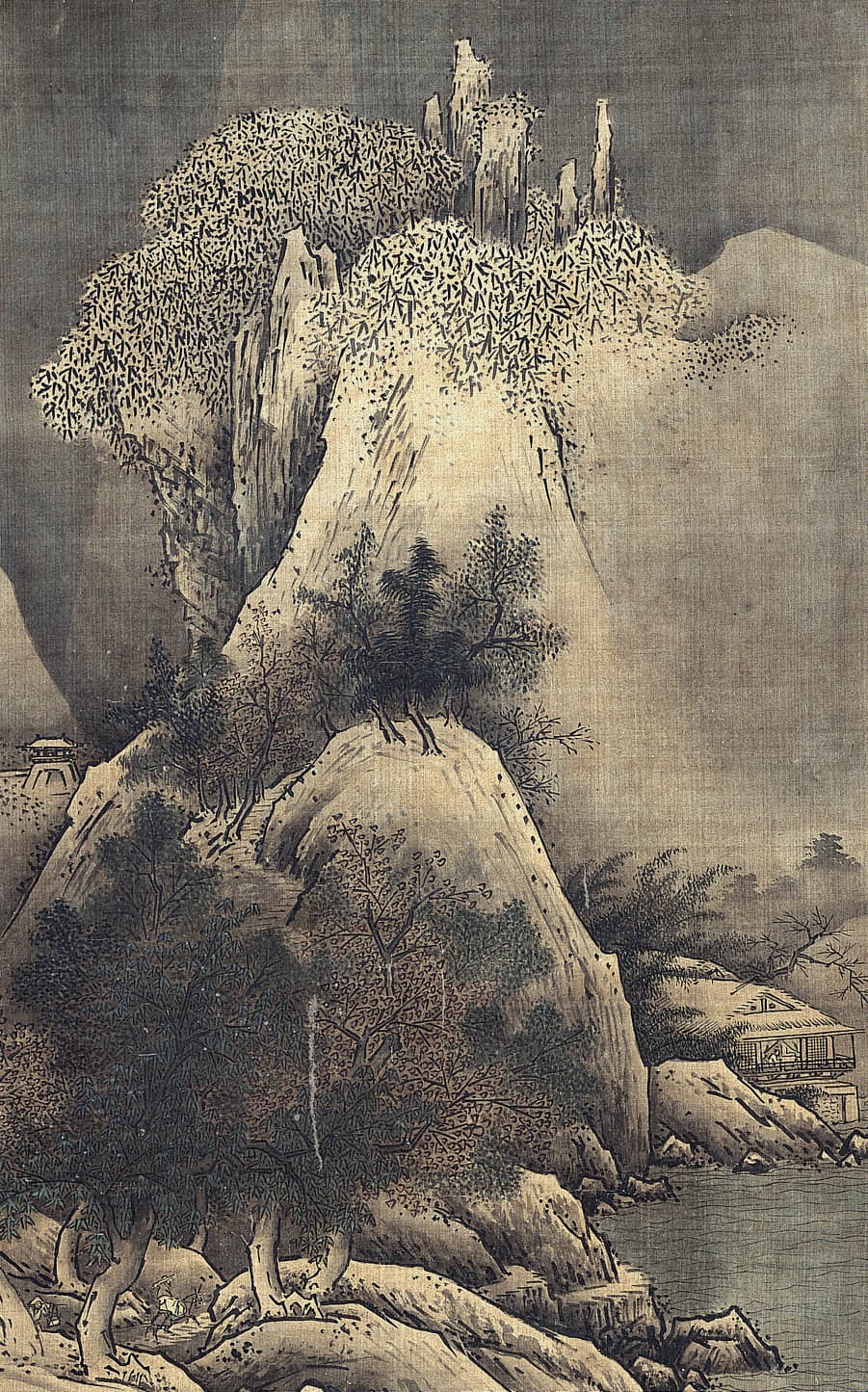
Winter Landscape
Sesshū Tōyō (雪舟等楊), 15th century
Sesshū was a Zen monk who traveled to China in the 1460s and brought Song Dynasty ink painting techniques back to Japan. This winter scene uses minimal brushwork and monochrome ink to depict a bare landscape stripped of ornamentation. The reduction of visual elements to essential forms connects to hexagram 41's theme of decrease.
Wilhelm Commentary
Richard Wilhelm's classic translation and interpretation
The Judgment
Decrease does not under all circumstances mean something bad. Increase and decrease come in their own time. What matters here is to understand the time and not to try to cover up poverty with empty pretense. If a time of scanty resources brings out an inner truth, one must not feel ashamed of simplicity. For simplicity is then the very thing needed to provide inner strength for further undertakings. Indeed, there need be no concern if the outward beauty of the civilization, even the elaboration of religious forms, should have to suffer because of simplicity. One must draw on the strength of the inner attitude to compensate for what is lacking in externals; then the power of the content makes up for the simplicity of form. There is no need of presenting false appearances to God. Even with slender means, the sentiment of the heart can be expressed.
The Image
The lake at the foot of the mountain evaporates. In this way it decreases to the benefit of the mountain, which is enriched by its moisture. The mountain stands as the symbol of stubborn strength that can harden into anger. The lake is the symbol of unchecked gaiety that can develop into passionate drives at the expense of the life forces. Therefore decrease is necessary; anger must be decreased by keeping still, the instincts must be curbed by restriction. By this decrease of the lower powers of the psyche, the higher aspects of the soul are enriched.
First (Bottom) Line
It is unselfish and good when a man, after completing his own urgent tasks, uses his strength in the service of others, and without bragging or making much of it, helps quickly where help is needed. But the man in a superior position who is thus aided must weigh carefully how much he can accept without doing the helpful servant or friend real harm. Only where such delicacy of feeling exists can one give oneself unconditionally and without hesitation.
Second Line
A high-minded self-awareness and a consistent seriousness with no forfeit of dignity are necessary if a man wants to be of service to others. He who throw himself away in order to do the bidding of a superior diminishes his own position without thereby giving lasting benefit to the other. This is wrong. To render true service of lasting value to another, one must serve him without relinquishing oneself.
Third Line
When there are three people together, jealousy arises. One of them will have to go. A very close bond is possible only between two people. But when one man is lonely, he is certain to find a companion who complements him.
Fourth Line
A man's faults often prevent even well-disposed people from coming closer to him. His faults are sometimes reinforced by the environment in which he lives. But if in humility he can bring himself to the point of giving them up, he frees his well-disposed friends from an inner pressure and causes them to approach the more quickly, and there is mutual joy.
Fifth Line
If someone is marked out by fate for good fortune, it comes without fail. All oracles–as for instance those that are read from the shells of tortoises–are bound to concur in giving him favorable signs. He need fear nothing, because his luck is ordained from on high.
Sixth (Top) Line
There are people who dispense blessings to the whole world. Every increase in power that comes to them benefits the whole of mankind and therefore does not bring decrease to others. Through perseverance and zealous work a man wins success and finds helpers as they are needed. But what he accomplishes is not a limited private advantage; it is a public good and available to everyone.