益
Yì — Increase
upper trigram
巽Wind (Penetrating)lower trigram
震Thunder (Movement)The Judgment
利有攸往。利涉大川。
Character-by-character gloss
Modern Interpretation
It furthers one to undertake something. It furthers one to cross the great water. Sacrifice from those above for the increase of those below fills the people with joy and gratitude. When people are devoted to their leaders, even difficult and dangerous enterprises succeed. This time resembles the marriage of heaven and earth. The time of Increase does not endure—it must be utilized while it lasts.
The Image
風雷,益。君子以見善則遷,有過則改。
Character-by-character gloss
Modern Interpretation
Wind and thunder increase and strengthen each other. See good in others—imitate it. Perceive something bad in yourself—rid yourself of it. This ethical change represents the most important increase of personality.
「風雷,益。」風和雷互相增強。見善則遷,有過則改——這是最實在的自我增益。看見別人的好,學過來;發現自己的壞,改掉。說起來簡單,但這種倫理上的改變,大概是人格成長最重要的部分。
The Six Lines
First (Bottom) Line
初九 利用為大作。元吉无咎。
Modern Interpretation
It furthers one to accomplish great deeds. Supreme good fortune. No blame. Great help comes from above. This increased strength must be used for something great that you otherwise wouldn't have had the energy or readiness for. Selflessness produces great good fortune.
Second Line
六二 或益之十朋之龜。弗克違。永貞吉。王用享于帝吉。
Modern Interpretation
Someone indeed increases you. Ten pairs of tortoise shells cannot oppose it. Constant persistence brings good fortune. You bring about real increase by producing in yourself the conditions for it—receptivity to and love of the good. Where increase is in harmony with the highest laws, no accidents can prevent it. Don't let good fortune make you heedless.
Third Line
六三 益之用凶事。无咎。有孚中行。告公用圭。
Modern Interpretation
Enriched through unfortunate events. No blame, if you are sincere and walk in the middle. A time of blessing has such power that even ordinarily unfortunate events turn to your advantage. Acting in harmony with truth, you gain inner authority as if sanctioned by letter and seal.
Fourth Line
六四 中行。告公從。利用為依遷國。
Modern Interpretation
Walking in the middle and reporting to the prince, who follows. It furthers one to be used in the removal of the capital. Disinterested people must mediate between leaders and followers. Nothing should be held back selfishly—it must reach those for whom it's intended. Essential in times of great undertakings requiring everyone's inner assent.
Fifth Line
九五 有孚惠心。勿問元吉。有孚惠我德。
Modern Interpretation
If in truth you have a kind heart, ask not. Supreme good fortune. Truly, kindness will be recognized as your virtue. True kindness doesn't count on merit or gratitude but acts from inner necessity. Such a heart finds itself rewarded in being recognized.
Sixth (Top) Line
上九 莫益之。或擊之。立心勿恆。凶。
Modern Interpretation
He brings increase to no one. Indeed, someone even strikes him. His heart is not constantly steady. Misfortune. Those in high places should bring increase to those below. Neglecting this duty loses you the support of others. You find yourself alone, inviting attack. Brusqueness in movements, agitation in words—if no one is with you, those who would harm you draw near.
Yilin Verse
From the Forest of Changes (焦氏易林) — 益 Yì (Increase)
文王四乳,仁愛篤厚。子畜十男,无有折夭。
King Wen with his four breasts, benevolent love deep and generous. He reared ten sons; not one met an early death.
Full explanation
Wind and thunder bestow increase, and the transformation returns to itself — Increase upon Increase, the hexagram doubled. King Wen possessed four nipples, a sign of profound benevolence and sagely compassion. He raised ten sons, and not one suffered an early death. According to the Huainanzi, 'King Wen had four nipples; this is called great benevolence — all under heaven turn to him, and the hundred clans draw near.' The four nipples were understood as a bodily mark of superabundant virtue, an outward sign that this ruler could nourish more than ordinary men. From Increase to Increase, the verse celebrates the pure archetype of the hexagram: generosity so complete that it reproduces itself across generations without diminishment. The sage's body itself overflows with the capacity to sustain.
Masterpiece
A work of art reflecting this hexagram's essence
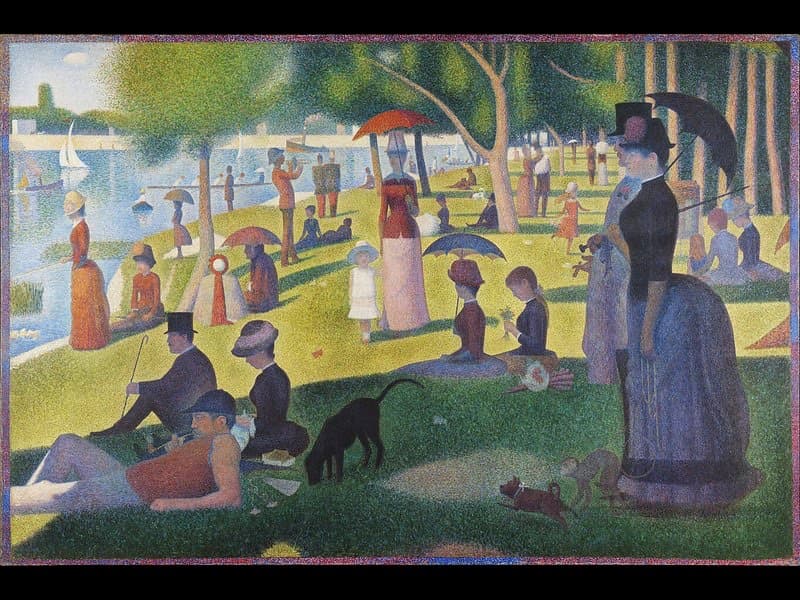
A Sunday Afternoon
Seurat, 1884
Seurat spent two years creating this large canvas using pointillism, a technique where tiny dots of color combine optically to form the image. The painting depicts Parisians at leisure on an island in the Seine, showing the growth of public leisure spaces in industrializing France. The accumulation of thousands of individual points to create abundance relates to hexagram 42's theme of increase.
Wilhelm Commentary
Richard Wilhelm's classic translation and interpretation
The Judgment
Sacrifice on the part of those above for the increase of those below fills the people with a sense of joy and gratitude that is extremely valuable for the flowering of the commonwealth. When people are thus devoted to their leaders, undertakings are possible, and even difficult and dangerous enterprises will succeed. Therefore in such times of progress and successful development it is necessary to work and make the best use of the time. This time resembles that of the marriage of heaven and earth, when the earth partakes of the creative power of heaven, forming and bringing forth living beings. The time of INCREASE does not endure, therefore it must be utilized while it lasts.
The Image
While observing how thunder and wind increase and strengthen each other, a man can note the way to self-increase and self-improvement. When he discovers good in others, he should imitate it and thus make everything on earth his own. If he perceives something bad in himself, let him rid himself of it. In this way he becomes free of evil. This ethical change represents the most important increase of personality.
First (Bottom) Line
If great help comes to a man from on high, this increased strength must be used to achieve something great for which he might otherwise never have found energy, or readiness to take responsibility. Great good fortune is produced by selflessness, and in bringing about great good fortune, he remains free of reproach.
Second Line
A man brings about real increase by producing in himself the conditions for it, that is, through receptivity to and love of the good. Thus the thing for which he strives comes of itself, with the inevitability of natural law. Where increase is thus in harmony with the highest laws of the universe, it cannot be prevented by any constellation of accidents. But everything depends on his not letting unexpected good fortune make him heedless; he must make it his own through inner strength and steadfastness. Then he acquires meaning before God and man, and can accomplish something for the good of the world.
Third Line
A time of blessing and enrichment has such powerful effects that even events ordinarily unfortunate must turn out to the advantage of those affected by them. These persons become free of error, and by acting in harmony with truth they gain such inner authority that they exert influence as if sanctioned by letter and seal.
Fourth Line
It is important that there should be men who mediate between leaders and followers. These should be disinterested people, especially in times of increase, since the benefit is to spread from the leader to the people. Nothing of this benefit should be held back in a selfish way; it should really reach those for whom it is intended. This sort of intermediary, who also exercises a good influence on the leader, is especially important in times when it is a matter of great undertakings, decisive for the future and requiring the inner assent of all concerned.
Fifth Line
True kindness does not count upon nor ask about merit and gratitude but acts from inner necessity. And such a truly kind heart finds itself rewarded in being recognized, and thus the beneficent influence will spread unhindered.
Sixth (Top) Line
The meaning here is that through renunciation those in high place should bring increase to those below. By neglecting this duty and helping no one, they in turn lose the furthering influence of others and soon find themselves alone. In this way they invite attacks. An attitude not permanently in harmony with the demands of the time will necessarily bring misfortune with it. Confucius says about this line: The superior man sets his person at rest before he moves; he composes his mind before he speaks; he makes his relations firm before he asks for something. By attending to these three matters, the superior man gains complete security. But if a man is brusque in his movements, others will not co-operate. If he is agitated in his words, they awaken no echo in others. If he asks for something without having first established relations, it will not be given to him. If no one is with him, those who would harm him draw near.