姤
Gòu — Coming to Meet
upper trigram
乾Heaven (Strong)lower trigram
巽Wind (Penetrating)The Judgment
女壯。勿用取女。
Character-by-character gloss
Modern Interpretation
The maiden is powerful. One should not marry such a maiden. After being eliminated, darkness unexpectedly obtrudes again from within and below. The inferior element seems harmless and inviting—you imagine you may dally with it and come to no harm. The inferior rises only because the superior doesn't regard it as dangerous and lends it power. If resisted from the first, it could never gain influence. But meeting can also be important: when elements predestined to be joined come together halfway, the world prospers. The meeting must be free of ulterior motives.
The Image
天下有風,姤。后以施命誥四方。
Character-by-character gloss
Modern Interpretation
Wind blows beneath heaven, reaching everywhere. The ruler is far from the people but sets them in motion by means of commands. Influence exercised from above.
「天下有風,姤。」風吹遍天下,無處不到。君主離人民很遠,但通過命令來推動他們。影響力從上面施展。這種距離感有時候是必要的。
The Six Lines
First (Bottom) Line
初六 繫于金柅。貞吉。有攸往。見凶。羸豕孚蹢躅。
Modern Interpretation
Check it at once with a brake of bronze. Persistence brings good fortune. Let it take its course and experience misfortune. Even a lean pig has it in him to rage around. An inferior element that has wormed its way in must be energetically checked immediately. Its insignificance should not tempt you to underrate it—a young pig, once grown strong, reveals its true nature.
Second Line
九二 包有魚。无咎。不利賓。
Modern Interpretation
There is a fish in the tank. No blame. Does not further guests. The inferior element is kept under gentle control, not overcome by violence. Nothing evil is to be feared. But don't let it come in contact with those further away—once free, it would unfold its evil aspects unchecked.
Third Line
九三 臀无膚。其行次且。厲。无大咎。
Modern Interpretation
No skin on his thighs, walking comes hard. If mindful of the danger, no great mistake is made. Temptation to fall in with the evil offering itself. Fortunately, circumstances prevent this. Painful indecision in behavior, but clear insight into danger avoids more serious mistakes.
Fourth Line
九四 包无魚。起凶。
Modern Interpretation
No fish in the tank. This leads to misfortune. Insignificant people must be tolerated to keep them well disposed—then they're at your disposal when needed. Become alienated, fail to meet them halfway, and they turn their backs. Your own fault.
Fifth Line
九五 以杞包瓜。含章。有隕自天。
Modern Interpretation
A melon covered with willow leaves. Hidden lines. Then it drops from heaven. A strong, superior person tolerates and protects the inferiors in their charge without laying stress on their own firm lines of order. No tiresome admonitions—trust in the transforming power of an upright personality. Fate is favorable; inferiors respond like ripe fruit.
Sixth (Top) Line
上九 姤其角。吝。无咎。
Modern Interpretation
He comes to meet with his horns. Humiliation, but no blame. When withdrawn from the world, you may hold yourself aloof from all that is low and rebuff it brusquely. You're reproached for being proud and distant, but since active duties no longer hold you, this doesn't greatly matter. Bear the dislike of the masses with composure.
Yilin Verse
From the Forest of Changes (焦氏易林) — 姤 Gòu (Coming to Meet)
河伯大呼,津不可渡。往復爾故,乃无大悔。
The River Lord cries out in warning; the ford cannot be crossed. Going and returning to one's former way; thus there is no great regret.
Full explanation
Wind beneath heaven doubles upon itself — Gou encountering Gou. The Earl of the River bellows a great cry: the ford cannot be crossed! One goes back and forth, retracing old paths, and thereby avoids great regret. The river god Hebo's warning halts forward movement, and the traveler wisely retreats to familiar ground rather than forcing a dangerous crossing. When the same hexagram meets itself, the pattern reinforces rather than transforms: the encounter remains an encounter, permanently suspended. From Coming to Meet to Coming to Meet, the yin line that entered from below neither advances nor retreats but dwells at the threshold, eternally arriving, never fully arrived.
Masterpiece
A work of art reflecting this hexagram's essence
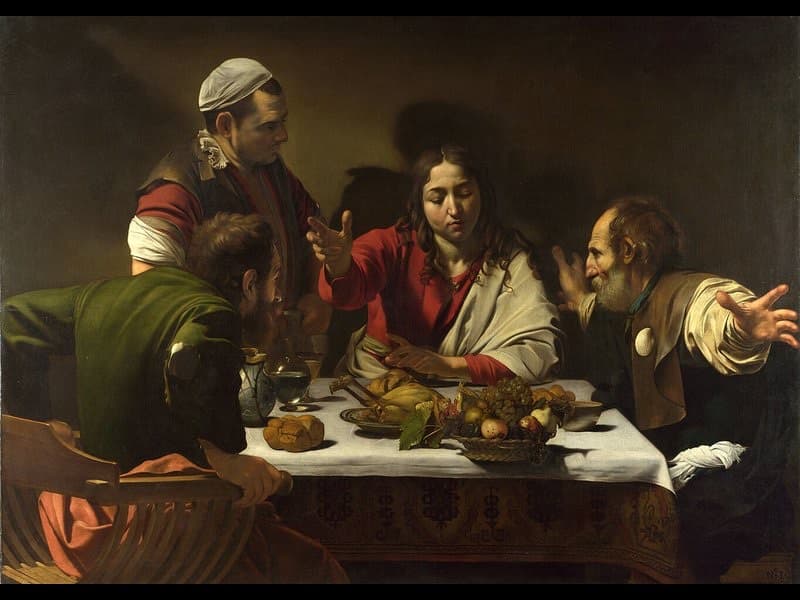
Supper at Emmaus
Caravaggio, 1601
Caravaggio depicts the biblical moment when two disciples suddenly recognize the risen Christ at dinner, three days after crucifixion. Their dramatic gestures capture the instant of unexpected recognition. The painting shows how something hidden or unnoticed (the divine in human form) suddenly comes to meet us, relating to hexagram 44's theme of coming to meet.
Wilhelm Commentary
Richard Wilhelm's classic translation and interpretation
The Judgment
The rise of the inferior element is pictured here in the image of a bold girl who lightly surrenders herself and thus seizes power. This would not be possible if the strong and light-giving element had not in turn come halfway. The inferior thing seems so harmless and inviting that a man delights in it; it looks so small and weak that he imagines he may dally with it and come to no harm. The inferior man rises only because the superior man does not regard him as dangerous and so lends him power. If he were resisted from the first, he could never gain influence. The time of COMING TO MEET is important in still another way. Although as a general rule the weak should not come to meet the strong, there are times when this has great significance. When heaven and earth come to meet each other, all creatures prosper; when a prince and his official come to meet each other, the world is put in order. It is necessary for elements predestined to be joined and mutually dependent to come to meet one another halfway. But the coming together must be free of dishonest ulterior motives, otherwise harm will result.
The Image
The situation here resembles that in hexagram 20, Kuan, CONTEMPLATION (VIEW). In the latter the wind blows over the earth, here it blows under heaven; in both cases it goes everywhere. There the wind is on the earth and symbolizes the ruler taking note of the conditions in his kingdom; here the wind blows from above and symbolizes the influence exercised by the ruler through his commands. Heaven is far from the things of earth, but it sets them in motion by means of the wind. The ruler is far form his people, but he sets them in motion by means of his commands and decrees.
First (Bottom) Line
If an inferior element has wormed its way in, it must be energetically checked at once. By consistently checking it, bad effects can be avoided. If it is allowed to take its course, misfortune is bound to result; the insignificance of that which creeps in should not be a temptation to underrate it. A pig that is still young and lean cannot rage around much, but after it has eaten its fill and become strong, its true nature comes out if it has not previously been curbed.
Second Line
The inferior element is not overcome by violence but is kept under gentle control. Then nothing evil is to be feared. But care must be taken not to let it come in contact with those further away, because once free it would unfold its evil aspects unchecked.
Third Line
There is a temptation to fall in with the evil element offering itself–a very dangerous situation. Fortunately circumstances prevent this; one would like to do it, but cannot. This leads to painful indecision in behavior. But if we gain clear insight into the danger of the situation, we shall at least avoid more serious mistakes.
Fourth Line
Insignificant people must be tolerated in order to keep them well disposed. Then we can make use of them if we should need them. If we become alienated from them and do not meet them halfway, they turn their backs on us and are not at our disposal when we need them. But this is our own fault.
Fifth Line
The melon, like the fish, is a symbol of the principle of darkness. It is sweet but spoils easily and for this reason is protected with a cover of willow leaves. This is a situation in which a strong, superior, well-poised man tolerates and protects the inferiors in his charge. He has the firm lines of order and beauty within himself but he does not lay stress upon them. He does not bother his subordinates with outward show or tiresome admonitions but leaves them quite free, putting his trust in the transforming power of a strong and upright personality. And behold! Fate is favorable. His inferiors respond to his influence and fall to his disposition like ripe fruit.
Sixth (Top) Line
When a man has withdrawn from the world, its tumult often becomes unbearable to him. There are many people who in a noble pride hold themselves aloof from all that is low and rebuff it brusquely wherever it comes to meet them. Such persons are reproached for being proud and distant, but since active duties no longer hold them to the world, this does not greatly matter. They know how to bear the dislike of the masses with composure.