革
Gé — Revolution
upper trigram
兌Lake (Joyful)lower trigram
離Fire (Clinging)The Judgment
巳日乃孚。元亨。利貞。悔亡。
Character-by-character gloss
Modern Interpretation
On your own day you are believed. Supreme success, furthering through persistence. Remorse disappears. Revolutions are extremely grave matters—undertaken only under direst necessity when there is no other way out. Not everyone is called to this task, only one who has the confidence of the people, and only when the time is ripe. Proceed in the right way to gladden the people and prevent excesses. Be free of selfish aims, genuinely relieve the need. Only then is there nothing to regret.
The Image
澤中有火,革。君子以治曆明時。
Character-by-character gloss
Modern Interpretation
Fire in the lake—combat and destruction. Set the calendar in order, make the seasons clear. In the course of the year, light and darkness battle, creating the revolution of seasons. Master these changes by noting their regularity. Order and clarity appear in apparent chaos; you can adjust in advance to the demands of different times.
「澤中有火,革。」火與水互相衝突,互相消滅。但正是這種衝突,造成季節的更替。象辭說君子「治曆明時」——在混亂中找出規律,標記時間的流轉。變化本身不可怕,怕的是看不清變化的節奏。
The Six Lines
First (Bottom) Line
初九 鞏用黃牛之革。
Modern Interpretation
Wrapped in the hide of a yellow cow. Changes should be undertaken only when there is nothing else to be done. Utmost restraint is necessary at first. Become firm in your mind, control yourself, and refrain from doing anything for the time being. Any premature offensive will bring evil results.
Second Line
六二 巳日乃革之。征吉无咎。
Modern Interpretation
When your own day comes, you may create revolution. Starting brings good fortune. No blame. When every other way to bring about reforms has failed, revolution becomes necessary. But such thoroughgoing upheaval must be carefully prepared. A person with the requisite abilities and public confidence is needed. Go out to meet the new condition, preparing for it in advance.
Third Line
九三 征凶貞厲。革言三就。有孚。
Modern Interpretation
Starting brings misfortune. Persistence brings danger. When talk of revolution has gone the rounds three times, one may commit. And people will believe. Two mistakes to avoid: excessive haste and ruthlessness, or excessive hesitation and conservatism. Not every demand for change should be heeded, but repeated and well-founded complaints should not fail of a hearing.
Fourth Line
九四 悔亡有孚。改命吉。
Modern Interpretation
Remorse disappears. People believe. Changing the form of government brings good fortune. Radical changes require adequate authority—inner strength as well as influential position. What you do must correspond with higher truth, not spring from arbitrary or petty motives. People support only those undertakings they feel instinctively to be just.
Fifth Line
九五 大人虎變。未占有孚。
Modern Interpretation
The great person changes like a tiger. Even before questioning the oracle, believed. A tiger's stripes are visible from afar. Large, clear guiding lines become understandable to everyone. You don't need to consult the oracle first—you win spontaneous support from the people.
Sixth (Top) Line
上六 君子豹變。小人革面。征凶。居貞吉。
Modern Interpretation
The superior person changes like a panther. The inferior person molts in the face. Starting brings misfortune. Remaining persistent brings good fortune. After the large problems are settled, certain minor reforms remain necessary. Inferior people also 'molt' in conformity with the new order, though this molting doesn't go very deep. Be satisfied with the attainable. If you go too far, trying to achieve too much, unrest and misfortune will result.
Yilin Verse
From the Forest of Changes (焦氏易林) — 革 Gé (Revolution)
馬服長股,宜行善市。蒙祐諧偶,獲金五倍。
The horse, tall with long legs, is fit for travel and good for market. Blessed with favor and a worthy match, the gold earned is fivefold.
Full explanation
Fire within the lake returns to fire within the lake — Revolution unchanged, the pattern repeating itself. Long-legged horses well suited to their harness, good for travel and commerce. Blessed with fortune and matched with a partner, one gains gold fivefold. When Revolution meets itself, the dynamic is pure transformation without destination: constant molting, constant renewal. The horse with long legs is built for the road; the merchant who matches goods to markets multiplies wealth. There is no resistance, no friction — the pattern flows. From Revolution to Revolution, the message is that some natures are made for change itself: the perpetual trader, the born adapter, profits precisely because nothing stays still.
Masterpiece
A work of art reflecting this hexagram's essence
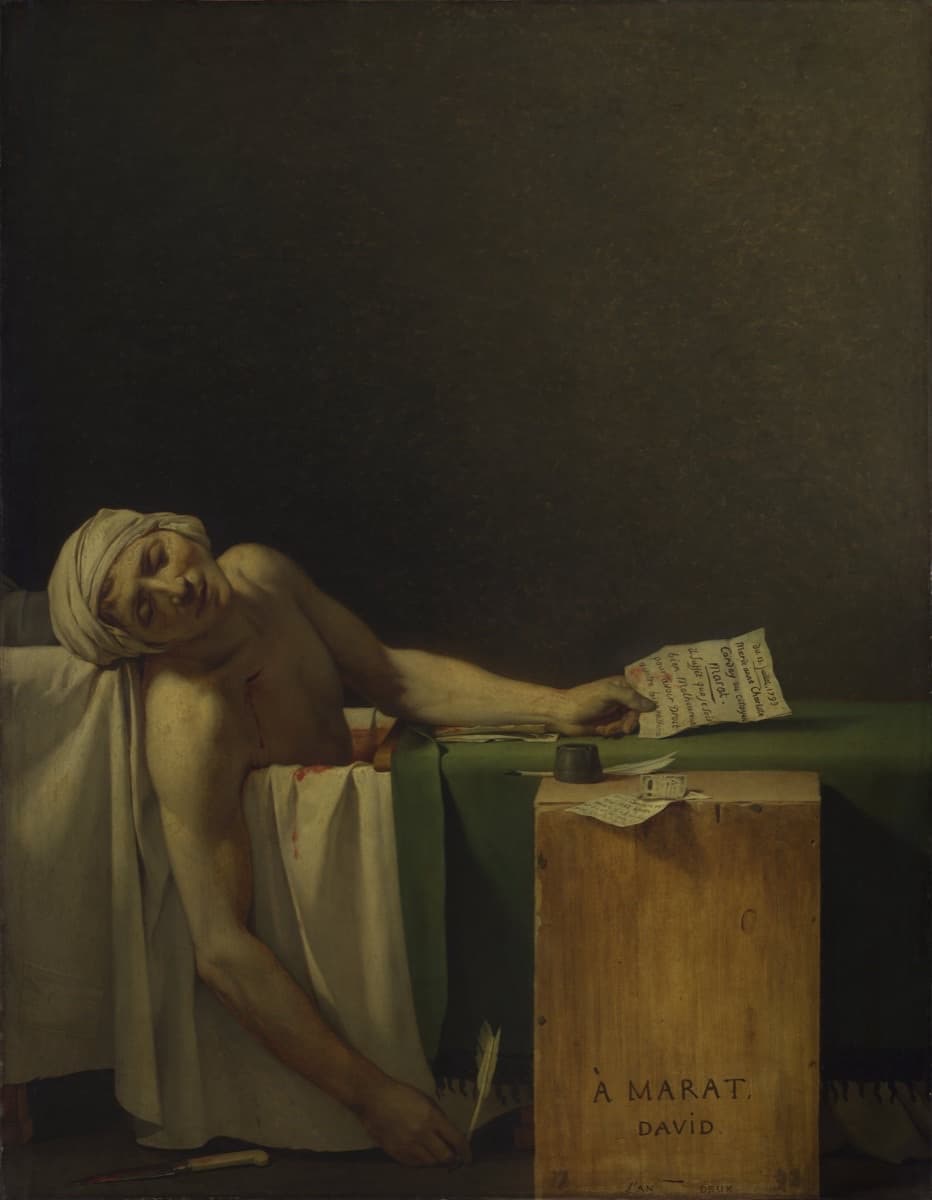
The Death of Marat
Jacques-Louis David, 1793
David painted this Neoclassical work commemorating journalist and radical deputy Jean-Paul Marat, assassinated in his medicinal bath during the French Revolution's Reign of Terror. The painting depicts violent political transformation, showing Marat moments after death with the assassin's knife on the floor, connecting to Revolution's theme of sudden, decisive change in the social order.
Wilhelm Commentary
Richard Wilhelm's classic translation and interpretation
The Judgment
Political revolutions are extremely grave matters. They should be undertaken only under stress of direst necessity, when there is no other way out. Not everyone is called to this task, but only the man who has the confidence of the people, and even he only when the time is ripe. He must then proceed in the right way, so that he gladdens the people and, by enlightening them, prevents excesses. Furthermore, he must be quite free of selfish aims and must really relieve the need of the people. Only then does he have nothing to regret. Times change, and with them their demands. Thus the seasons change in the course of the year. In the world cycle also there are spring and autumn in the life of peoples and nations, and these call for social transformations.
The Image
Fire below and the lake above combat and destroy each other. So too in the course of the year a combat takes place between the forces of light and the forces of darkness, eventuating in the revolution of the seasons. Man masters these changes in nature by noting their regularity and marking off the passage of time accordingly. In this way order and clarity appear in the apparently chaotic changes of the seasons, and man is able to adjust himself in advance to the demands of the different times.
First (Bottom) Line
Changes ought to be undertaken only when there is nothing else to be done. Therefore at first the utmost restraint is necessary. One must become firm in one's mind, control oneself–yellow is the color of the mean, and the cow is the symbol of docility–and refrain from doing anything for the time being, because any premature offensive will bring evil results.
Second Line
When we have tried in every other way to bring about reforms, but without success, revolution becomes necessary. But such a thoroughgoing upheaval must be carefully prepared. There must be available a man who has the requisite abilities and who possesses public confidence. To such a man we may well turn. This brings good fortune and is not a mistake. The first thing to be considered is our inner attitude toward the new condition that will inevitably come. We have to go out to meet it, as it were. Only in this way can it be prepared for.
Third Line
When change is necessary, there are two mistakes to be avoided. One lies in excessive haste and ruthlessness, which bring disaster. The other lies in excessive hesitation and conservatism, which are also dangerous. Not every demand for change in the existing order should be heeded. On the other hand, repeated and well-founded complaints should not fail of a hearing. When talk of change has come to one's ears three times, and has been pondered well, he may believe and acquiesce in it. Then he will meet with belief and will accomplish something.
Fourth Line
Radical changes require adequate authority. A man must have inner strength as well as influential position. What he does must correspond with a higher truth and must not spring from arbitrary or petty motives; then it brings great good fortune. If a revolution is not founded on such inner truth, the results are bad, and it has no success. For in the end men will support only those undertakings which they feel instinctively to be just.
Fifth Line
A tigerskin, with its highly visible black stripes on a yellow ground, shows its distinct pattern from afar. It is the same with a revolution brought about by a great man: large, clear guiding lines become visible, understandable to everyone. Therefore he need not first consult the oracle, for he wins the spontaneous support of the people.
Sixth (Top) Line
After the large and fundamental problems are settled, certain minor reforms, and elaborations of these, are necessary. These detailed reforms may be likened to the equally distinct but relatively small marks of the panther's coat. As a consequence, a change also takes place among the inferior people. In conformity with the new order, they likewise "molt. " This molting, it is true, does not go very deep, but that is not to be expected. We must be satisfied with the attainable. If we should go too far and try to achieve too much, it would lead to unrest and misfortune. For the object of a great revolution is the attainment of clarified, secure conditions ensuring a general stabilization on the basis of what is possible at the moment.