井
Jǐng — The Well
upper trigram
坎Water (Danger)lower trigram
巽Wind (Penetrating)The Judgment
改邑不改井。无喪无得。往來井井。汔至亦未繘井。羸其瓶。凶。
Character-by-character gloss
Modern Interpretation
The town may be changed, but the well cannot be changed. It neither decreases nor increases. They come and go and draw from the well. If the rope does not go all the way down, or the jug breaks, misfortune. Political structures change, nations rise and fall, but life with its needs remains eternally the same. Life is inexhaustible—it exists for one and for all. Two prerequisites: go down to the very foundations. Superficial ordering that leaves deepest needs unsatisfied is as ineffectual as no attempt at all. And carelessness by which the jug is broken is equally disastrous.
The Image
木上有水,井。君子以勞民勸相。
Character-by-character gloss
Modern Interpretation
Water over wood—wood sucks water upward. Organize human society so that, like a plant organism, its parts cooperate for the benefit of the whole. Encourage the people at their work; exhort them to help one another.
「木上有水,井。」木頭把水往上吸。組織人類社會,讓它像植物一樣,各部分為整體的利益而合作。「君子以勞民勸相」——鼓勵人們工作,勸勉他們互相幫助。這是很基本的道理,但社會往往做不到。
The Six Lines
First (Bottom) Line
初六 井泥不食。舊井无禽。
Modern Interpretation
One does not drink the mud of the well. No animals come to an old well. If you wander in swampy lowlands, your life is submerged in mud. Such a person loses all significance for mankind. He who throws himself away is no longer sought out by others. In the end, no one troubles about him.
Second Line
九二 井谷射鮒。甕敝漏。
Modern Interpretation
At the wellhole one shoots fishes. The jug is broken and leaks. The water is clear but not being used. The well is a place where only fish stay; whoever comes only catches fish. One possessing good qualities but neglecting them. No one bothers about you. As a result, the mind deteriorates. Association with inferior people; nothing worthwhile accomplished.
Third Line
九三 井渫不食。為我心惻。可用汲。王明。並受其福。
Modern Interpretation
The well is cleaned, but no one drinks from it. This is my heart's sorrow. One might draw from it. If the king were clear-minded, good fortune might be enjoyed in common. An able person is available like a purified well with drinkable water. But no use is made of them. The sorrow of those who know. One wishes the prince might learn of it—good fortune for all concerned.
Fourth Line
六四 井甃无咎。
Modern Interpretation
The well is being lined. No blame. While the work is going on, the well cannot be used. But the work is not in vain—the water will stay clear. In life too, there are times when you must put yourself in order. You can do nothing for others during such a time, but the work is valuable. By enhancing powers through inner development, you can accomplish all the more later.
Fifth Line
九五 井冽。寒泉食。
Modern Interpretation
In the well there is a clear, cold spring from which one can drink. A well fed by living water is a good well. A person with such virtues is born to be a leader and savior—they have the water of life. But 'good fortune' is left out. The all-important thing about a well is that its water be drawn. The best water is only potential refreshment until brought up. It is all-important to drink from the spring of wise words and translate them into life.
Sixth (Top) Line
上六 井收勿幕。有孚元吉。
Modern Interpretation
One draws from the well without hindrance. It is dependable. Supreme good fortune. The well is there for all. No one is forbidden to take water. No matter how many come, all find what they need—the well is dependable, with a spring that never runs dry. A great blessing to the whole land. The same is true of the really great person, whose inner wealth is inexhaustible: the more that people draw from them, the greater their wealth becomes.
Yilin Verse
From the Forest of Changes (焦氏易林) — 井 Jǐng (The Well)
躓跛未起,失利後市,不得鹿子。
Stumbling and lame, unable to rise; arriving late at the market, he loses his profit and cannot catch the deer.
Full explanation
Water drawn up through wood — but the well gazes into its own reflection and sees only stagnation. Stumbling and lame, unable to rise, one arrives too late at the market and fails to catch the young deer. The doubled well (source and target identical) intensifies the hexagram's inherent danger: a well that never changes, never moves, risks becoming a trap rather than a resource. The lame figure who misses the market recalls the well's line texts about fouled water and unused potential. From The Well to The Well, the pattern is self-referential: without transformation, the well's virtue calcifies. What should nourish becomes a prison of repetition, and opportunity slips away while the structure remains frozen in place.
Masterpiece
A work of art reflecting this hexagram's essence
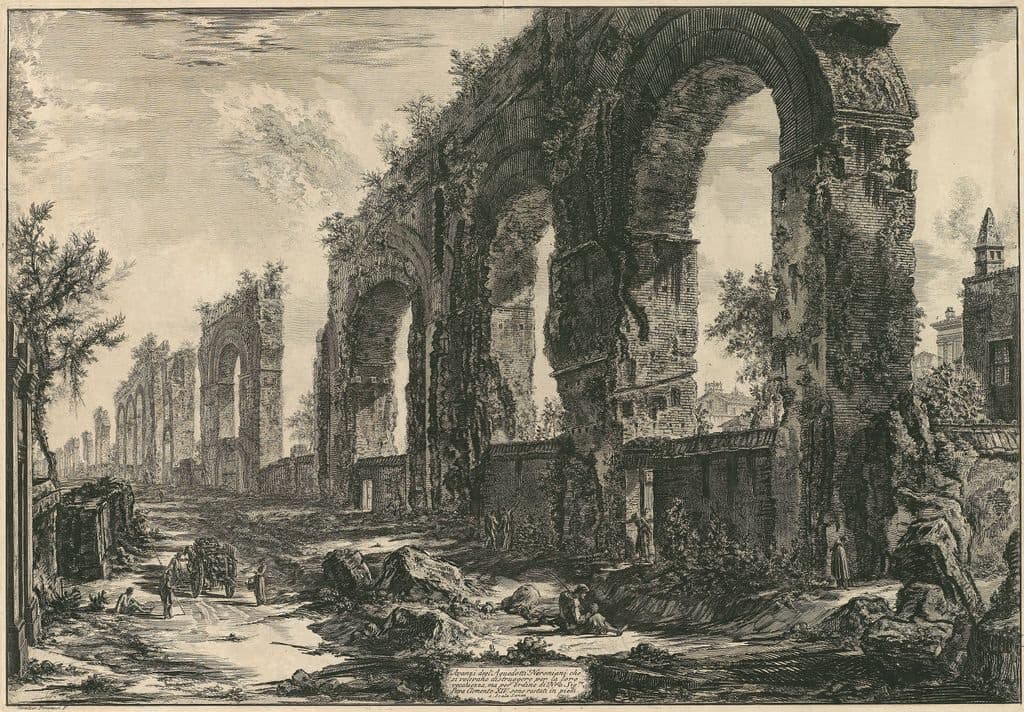
Aqueduct of Nero
Giovanni Battista Piranesi, 1775
Piranesi was an 18th-century Italian architect and printmaker who documented Roman ruins. This etching shows the remains of Aqua Claudia, an ancient aqueduct bringing water from mountain springs to Rome. The structure represents infrastructure that draws water from a distant source and distributes it to the city, relating to hexagram 48's image of the well.
Wilhelm Commentary
Richard Wilhelm's classic translation and interpretation
The Judgment
In ancient China the capital cities were sometimes moved, partly for the sake of more favorable location, partly because of a change in dynasties. The style of architecture changed in the course of centuries, but the shape of the well has remained the same from ancient times to this day. Thus the well is the symbol of that social structure which, evolved by mankind in meeting its most primitive needs, is independent of all political forms. Political structures change, as do nations, but the life of man with its needs remains eternally the same–this cannot be changed. Life is also inexhaustible. It grows neither less nor more; it exists for one and for all. The generations come and go, and all enjoy life in its inexhaustible abundance. However, there are two prerequisites for a satisfactory political or social organization of mankind. We must go down to the very foundations of life. For any merely superficial ordering of life that leaves its deepest needs unsatisfied is as ineffectual as if no attempt at order had ever been made. Carelessness–by which the jug is broken–is also disastrous. If for instance the military defense of a state is carried to such excess that it provokes wars by which the power of the state is annihilated, this is a breaking of the jug. This hexagram applies also to the individual. However men may differ in disposition and in education, the foundations of human nature are the same in everyone. And every human being can draw in the course of his education from the inexhaustible wellspring of the divine in man's nature. But here likewise two dangers threaten: a man may fail in his education to penetrate to the real roots of humanity and remain fixed in convention–a partial education of this sort is as bad as none–or he may suddenly collapse and neglect his self-development.
The Image
The trigram Sun, wood, is below, and the trigram K'an, water, is above it. Wood sucks water upward. Just as wood as an organism imitates the action of the well, which benefits all parts of the plant, the superior man organizes human society, so that, as in a plant organism, its parts co-operate for the benefit of the whole.
First (Bottom) Line
If a man wanders around in swampy lowlands, his life is submerged in mud. Such a man loses all significance for mankind. He who throws himself away is no longer sought out by others. In the end no one troubles about him any more.
Second Line
The water itself is clear, but it is not being used. Thus the well is a place where only fish will stay, and whoever comes to it, comes only to catch fish. But the jug is broken, so that the fish cannot be kept in it. This describes the situation of a person who possesses good qualities but neglects them. No one bothers about him. As a result he deteriorates in mind. He associates with inferior men and can no longer accomplish anything worth while.
Third Line
An able man is available. He is like a purified well whose water is drinkable. But no use is made of him. This is the sorrow of those who know him. One wishes that the prince might learn about it; this would be good fortune for all concerned.
Fourth Line
True, if a well is being lined with stone, it cannot be used while the work is going on. But the work is not in vain; the result is that the water stays clear. In life also there are times when a man must put himself in order. During such a time he can do nothing for others, but his work is nonetheless valuable, because by enhancing his powers and abilities through inner development, he can accomplish all the more later on.
Fifth Line
A well that is fed by a spring of living water is a good well. A man who has virtues like a well of this sort is born to be a leader and savior of men, for he has the water of life. Nevertheless, the character for "good fortune" is left out here. The all-important thing about a well is that its water be drawn. The best water is only a potentiality for refreshment as long as it is not brought up. So too with leaders of mankind: it is all-important that one should drink from the spring of their words and translate them into life.
Sixth (Top) Line
The well is there for all. No one is forbidden to take water from it. No matter how many come, all find what they need, for the well is dependable. It has a spring and never runs dry. Therefore it is a great blessing to the whole land. The same is true of the really great man, whose inner wealth is inexhaustible; the more that people draw from him, the greater his wealth becomes.