困
Kùn — Oppression
upper trigram
兌Lake (Joyful)lower trigram
坎Water (Danger)The Judgment
亨。貞大人吉。无咎。有言不信。
Character-by-character gloss
Modern Interpretation
Success. Persistence. The great person brings about good fortune. No blame. When you have something to say, it is not believed. Adversity is the reverse of success but can lead to success if it befalls the right person. The strong one remains cheerful despite danger—this cheerfulness is the source of later success, a stability stronger than fate. He who lets his spirit be broken has no success. But if adversity only bends you, it creates a power to react. In times of adversity, be strong within and sparing of words.
The Image
澤無水,困。君子以致命遂志。
Character-by-character gloss
Modern Interpretation
No water in the lake—exhaustion. Stake your life on following your will. When the water has flowed out below, the lake must dry up. This is fate. There is nothing you can do but acquiesce in your fate and remain true to yourself. This concerns the deepest stratum of being, which alone is superior to all external fate.
「澤無水,困。」湖裡沒有水,枯竭了。水從下面流走,湖只能乾涸,這是命運。這種時候沒有什麼可做的,只能接受命運,忠於自己。「君子以致命遂志」——用生命來實現意志。這涉及存在最深的層面,只有這個層面高於一切外在的命運。
The Six Lines
First (Bottom) Line
初六 臀困于株木。入于幽谷。三歲不覿。
Modern Interpretation
Sitting oppressed under a bare tree, straying into a gloomy valley. For three years, sees nothing. When adversity befalls you, be strong and overcome the trouble inwardly. If weak, the trouble overwhelms you. Sitting under a bare tree, falling into gloom and melancholy, makes everything more hopeless. This attitude comes from inner delusion that must be overcome.
Second Line
九二 困于酒食。朱紱方來。利用享祀。征凶无咎。
Modern Interpretation
Oppressed while at meat and drink. The one with scarlet knee bands is coming. It furthers one to offer sacrifice. To set forth brings misfortune. No blame. Inner oppression while externally all is well. Exhausted by the commonplaces of life with no way of escape. Help comes from a high place. Overcome disagreeable situations by patience of spirit.
Third Line
六三 困于石。據于蒺蔾。入于其宮。不見其妻。凶。
Modern Interpretation
Oppressed by stone, leaning on thorns and thistles. Enters the house and does not see his wife. Misfortune. Restless and indecisive in adversity. You butt your head against a wall and feel oppressed by it. Lean on things without stability. Turn back irresolutely only to find fresh disappointment. If oppressed by what ought not to oppress, disgrace follows.
Fourth Line
九四 來徐徐。困于金車。吝。有終。
Modern Interpretation
Coming very quietly, oppressed in a golden carriage. Humiliation, but the end is reached. You see the need of others and would like to help but begin hesitantly. Drawn into the circle of powerful acquaintances, you can't withdraw. Great embarrassment, but the trouble is transitory. Original strength offsets the mistake; the goal is reached.
Fifth Line
九五 劓刖。困于赤紱。乃徐有說。利用祭祀。
Modern Interpretation
Nose and feet cut off. Oppression at the hands of the one with purple knee bands. Joy comes softly. It furthers one to make offerings. One who has the good of mankind at heart is oppressed from above and below, finding no help among those whose duty it would be to assist. But little by little, things turn for the better. Until then, turn to what is beyond, firm in inner composure.
Sixth (Top) Line
上六 困于葛藟。于臲卼。曰動悔有悔。征吉。
Modern Interpretation
Oppressed by creeping vines. Moving uncertainly and saying 'Movement brings remorse.' If you feel remorse over this and make a start, good fortune comes. Oppressed by bonds easily broken. The distress is ending but you're still irresolute, influenced by the previous condition, fearing regret if you move. Grasp the situation, change your mental attitude, make a firm decision—master the oppression.
Yilin Verse
From the Forest of Changes (焦氏易林) — 困 Kùn (Oppression)
席多針刺,不可以臥。動而有悔,言行俱過。
The mat is full of needle pricks; one cannot lie down upon it. To move is to invite regret; word and deed alike transgress.
Full explanation
A lake without water transforming into itself: Oppression doubled. The mat is full of needles, impossible to lie down upon. Every movement brings regret; words and deeds both go wrong. This is the I-Ching's own warning for hexagram 47 taken to its extreme: the image of the lake drained again into a drained lake, oppression reinforcing itself. There is no escape because there is no change. The needle-studded mat captures the peculiar cruelty of a trap that punishes both action and inaction: one cannot rest, yet cannot move without making things worse. The only counsel is the hexagram's own judgment: the great man fulfills his fate and pursues his purpose. Even in double oppression, the sage does not abandon his will.
Masterpiece
A work of art reflecting this hexagram's essence
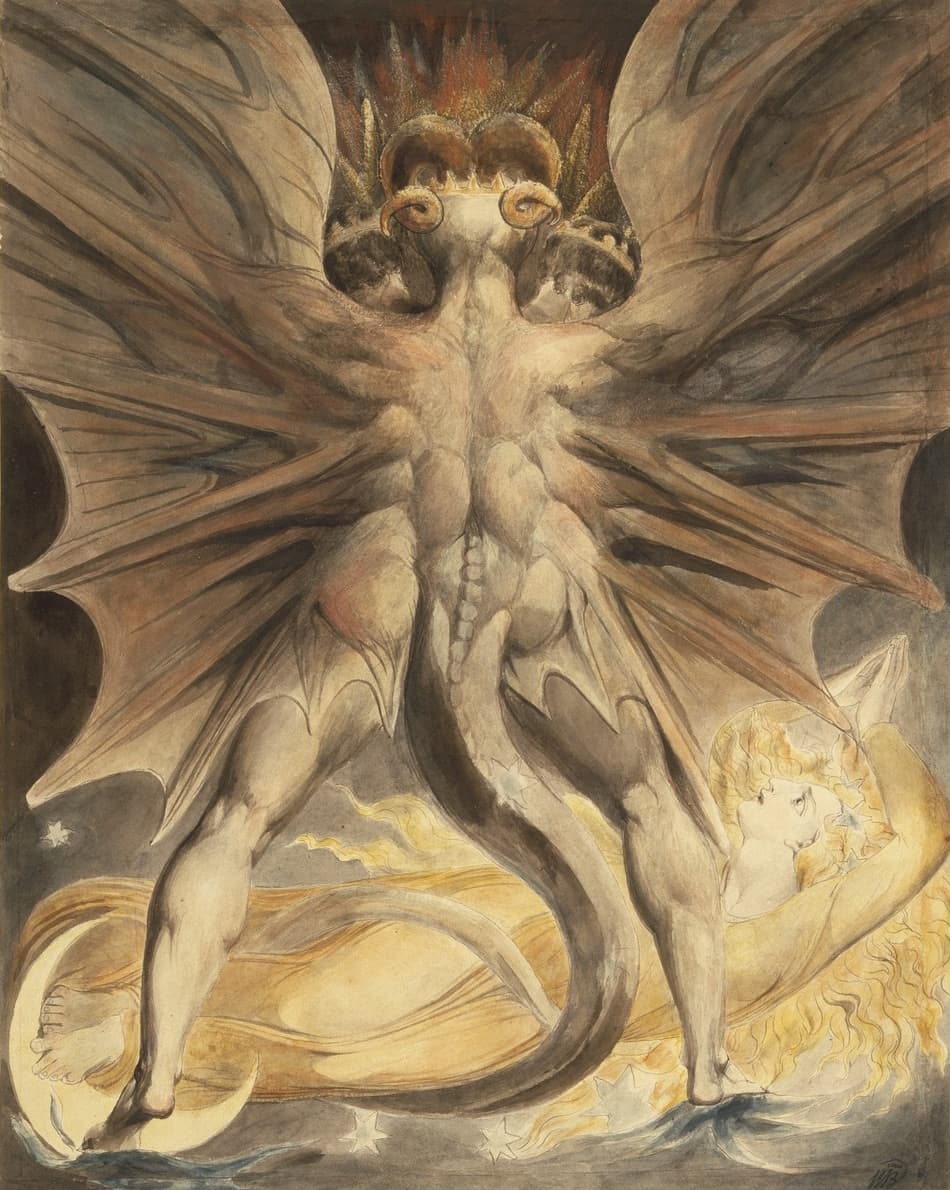
The Great Red Dragon and the Woman Clothed with the Sun
William Blake, 1805
Blake created this watercolor as part of a series illustrating the Book of Revelation. It depicts the seven-headed dragon from Revelation 12 towering over the pregnant woman clothed with the sun. The woman's helpless position beneath the overwhelming supernatural force relates to hexagram 47's theme of oppression or exhaustion.
Wilhelm Commentary
Richard Wilhelm's classic translation and interpretation
The Judgment
Times of adversity are the reverse of times of success, but they can lead to success if they befall the right man. When a strong man meets with adversity, he remains cheerful despite all danger, and this cheerfulness is the source of later successes; it is that stability which is stronger than fate. He who lets his spirit be broken by exhaustion certainly has no success. But if adversity only bends a man, it creates in him a power to react that is bound in time to manifest itself. No inferior man is capable of this. Only the great man brings about good fortune and remains blameless. It is true that for the time being outward influence is denied him, because his words have no effect. Therefore in times of adversity it is important to be strong within and sparing of words.
The Image
When the water has flowed out below, the lake must dry up and become exhausted. That is fate. This symbolizes an adverse fate in human life. In such times there is nothing a man can do but acquiesce in his fate and remain true to himself. This concerns the deepest stratum of his being, for this alone is superior to all external fate.
First (Bottom) Line
When adversity befalls a man, it is important above all things for him to be strong and to overcome the trouble inwardly. If he is weak, the trouble overwhelms him. Instead of proceeding on his way, he remains sitting under a bare tree and falls ever more deeply into gloom and melancholy. This makes the situation only more and more hopeless. Such an attitude comes from an inner delusion that he must by all means overcome.
Second Line
This pictures a state of inner oppression. Externally, all is well, one has meat and drink. But one is exhausted by the commonplaces of life, and there seems to be no way of escape. Then help comes from a high place. A prince–in ancient China princes wore scarlet knee bands–is in search of able helpers. But there are still obstructions to be overcome. Therefore it is important to meet these obstructions in the visible realm by offerings and prayer. To set forth without being prepared would be disastrous, though not morally wrong. Here a disagreeable situation must be overcome by patience of spirit.
Third Line
This shows a man who is restless and indecisive in times of adversity. At first he wants to push ahead, then he encounters obstructions that, it is true, mean oppression only when recklessly dealt with. He butts his head against a wall and in consequence feels himself oppressed by the wall. Then he leans on things that have in themselves no stability and that are merely a hazard for him who leans on them. Thereupon he turns back irresolutely and retires into his house, only to find, as a fresh disappointment, that his wife is not there. Confucius says about this line: If a man permits himself to be oppressed by something that ought not to oppress him, his name will certainly be disgraced. If he leans on things upon which one cannot lean, his life will certainly be endangered. For him who is in disgrace and danger, the hour of death draws near; how can he then still see his wife?
Fourth Line
A well-to-do man sees the need of the lower classes and would like very much to be of help. But instead of proceeding with speed and energy where there is need, he begins in a hesitant and measured way. Then he encounters obstructions. Powerful and wealthy acquaintances draw him into their circle; he has to do as they do and cannot withdraw from them. Hence he finds himself in great embarrassment. But the trouble is transitory. The original strength of his nature offsets the mistake he has made, and the goal is reached.
Fifth Line
An individual who has the good of mankind at heart is oppressed from above and below (this is the meaning of the cutting off of nose and feet). He finds no help among the people whose duty it would be to aid in the work of rescue (ministers wore purple knee bands). But little by little, things take a turn for the better. Until that time, he should turn to God, firm in his inner composure, and pray and offer sacrifice for the general well-being.
Sixth (Top) Line
A man is oppressed by bonds that can easily be broken. The distress is drawing to an end. But he is still irresolute; he is still influenced by the previous condition and fears that he may have cause for regret if he makes a move. But as soon as he grasps the situation, changes this mental attitude, and makes a firm decision, he masters the oppression.