震
Zhèn — The Arousing
upper trigram
震Thunder (Movement)lower trigram
震Thunder (Movement)The Judgment
亨。震來虩虩。笑言啞啞。震驚百里。不喪匕鬯。
Character-by-character gloss
Modern Interpretation
Success. Shock comes—oh, oh! Laughing words—ha, ha! The shock terrifies for a hundred miles, and he does not let fall the sacrificial spoon and chalice. When you have learned within your heart what fear and trembling mean, you are safeguarded against any terror produced by outside influences. Let thunder roll and spread terror a hundred miles around: remain so composed and reverent in spirit that the ritual is not interrupted. Profound inner seriousness from which all outer terrors glance off harmlessly.
The Image
洊雷,震。君子以恐懼修省。
Character-by-character gloss
Modern Interpretation
Thunder repeated. In fear and trembling, set your life in order and examine yourself. The superior person is always filled with reverence; sets their life in order and searches their heart, lest it harbor any secret opposition to the way of heaven. Reverence is the foundation of true culture.
「洊雷,震。」雷聲重複。象辭說君子「恐懼修省」——因為恐懼而整頓生活,檢查自己的心。看看裡面有沒有什麼在暗中違逆。敬畏,好像是文明的基礎。但這種敬畏不是對外界的害怕,而是對自己的誠實。
The Six Lines
First (Bottom) Line
初九 震來虩虩。後笑言啞啞。吉。
Modern Interpretation
Shock comes—oh, oh! Then follow laughing words—ha, ha! Good fortune. Fear and trembling come at first in such a way that you see yourself at a disadvantage. But this is transitory. When the ordeal is over, you experience relief. The very terror you had to endure at the outset brings good fortune in the long run.
Second Line
六二 震來厲。億喪貝。躋于九陵。勿逐。七日得。
Modern Interpretation
Shock comes bringing danger. A hundred thousand times you lose your treasures and must climb the nine hills. Do not go in pursuit of them. After seven days you will get them back. Shock endangers you and causes great losses. Resistance would be contrary to the movement of the time and therefore unsuccessful. Simply retreat to heights inaccessible to threatening forces. Accept loss of property without worrying too much—when shock passes, you will get them back without pursuit.
Third Line
六三 震蘇蘇。震行无眚。
Modern Interpretation
Shock comes and makes one distraught. If shock spurs to action, one remains free of misfortune. Three kinds of shock: heaven's thunder, fate's blows, the shock of the heart. In times of shock, presence of mind is all too easily lost; one overlooks opportunities and mutely lets fate take its course. But if you allow the shocks to induce movement within your mind, you will overcome external blows with little effort.
Fourth Line
九四 震遂泥。
Modern Interpretation
Shock is mired. Movement within the mind depends partly on circumstances. If there is neither resistance to combat vigorously nor yielding that permits victory—if instead everything is tough and inert like mire—movement is crippled.
Fifth Line
六五 震往來厲。意无喪有事。
Modern Interpretation
Shock goes hither and thither. Danger. However, nothing at all is lost. Yet there are things to be done. Not a single shock but repeated shocks with no breathing space between. Nonetheless, the shock causes no loss because you take care to stay in the center of movement and are spared the fate of being helplessly tossed about.
Sixth (Top) Line
上六 震索索。視矍矍。征凶。震不于其躬。于其鄰。无咎。婚媾有言。
Modern Interpretation
Shock brings ruin and terrified gazing around. Going ahead brings misfortune. If it has not yet touched your own body but has reached your neighbor first, there is no blame. Your comrades have something to talk about. When inner shock is at its height, it robs you of reflection and clarity of vision. Keep still until composure and clarity are restored. This you can do only when you yourself are not yet infected by the agitation, though its disastrous effects are visible in those around you.
Yilin Verse
From the Forest of Changes (焦氏易林) — 震 Zhèn (Arousing Thunder)
枯瓠不朽,利以濟舟。渡踰河海,无有溺憂。
The dried gourd does not decay; it serves to ferry the boat. Crossing over rivers and seas; there is no worry of drowning.
Full explanation
Thunder meets itself: pure shock reflected and redoubled. A dried gourd that does not rot — useful for crossing by boat. It ferries one across rivers and seas without fear of drowning. The gourd (瓠), hollow and light, floats naturally. Zhuangzi famously argued that even a useless thing, if understood correctly, becomes a vessel: the massive gourd that cannot be used as a ladle becomes a boat. The verse applies this insight to the self-referential hexagram: Thunder to Thunder, the shock that returns to itself discovers its own buoyancy. What seems empty and dried out proves to be the very quality that saves. From The Arousing to itself, the lesson is that thunder's nature, accepted without resistance, carries one safely through the deepest waters.
Masterpiece
A work of art reflecting this hexagram's essence
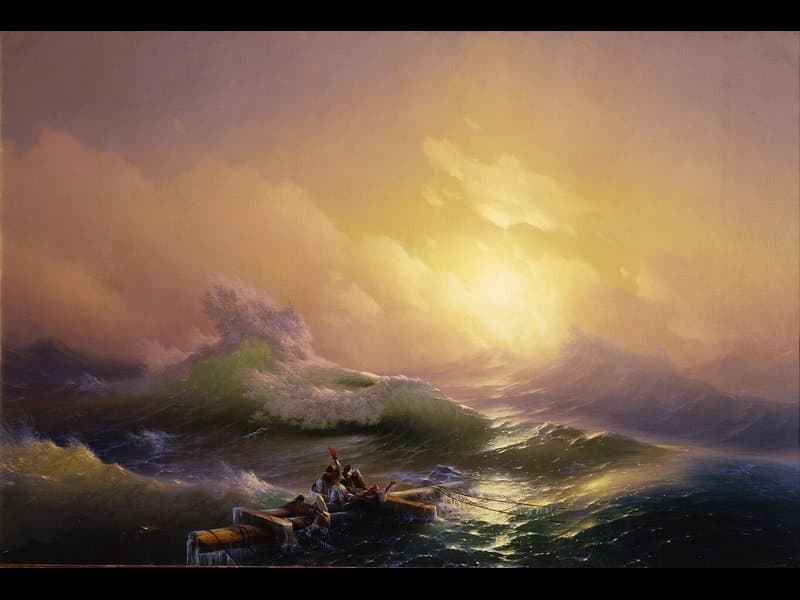
The Ninth Wave
Ivan Aivazovsky, 1850
Russian-Armenian marine painter Aivazovsky depicts shipwreck survivors clinging to debris as a massive wave approaches at sunrise. Maritime folklore held the ninth wave as the most dangerous in a storm sequence. The painting captures the sudden, overwhelming shock of nature's arousing power, connecting to The Arousing's thunderbolt imagery.
Wilhelm Commentary
Richard Wilhelm's classic translation and interpretation
The Judgment
The shock that comes from the manifestation of God within the depths of the earth makes man afraid, but this fear of God is good, for joy and merriment can follow upon it. When a man has learned within his heart what fear and trembling mean, he is safeguarded against any terror produced by outside influences. Let the thunder roll and spread terror a hundred miles around: he remains so composed and reverent in spirit that the sacrificial rite is not interrupted. This is the spirit that must animate leaders and rulers of men–a profound inner seriousness from which all outer terrors glance off harmlessly.
The Image
The shock of continuing thunder brings fear and trembling. The superior man is always filled with reverence at the manifestation of God; he sets his life in order and searches his heart, lest it harbor any secret opposition to the will of God. Thus reverence is the foundation of true culture.
First (Bottom) Line
The fear and trembling engendered by shock come to an individual at first in such a way that he sees himself placed at a disadvantage as against others. But this is only transitory. When the ordeal is over, he experiences relief, and thus the very terror he had to endure at the outset brings good fortune in the long run.
Second Line
This pictures a situation in which a shock endangers a man and he suffers great losses. Resistance would be contrary to the movement of the time and for this reason unsuccessful. Therefore he must simply retreat to heights inaccessible to the threatening forces of danger. He must accept his loss of property without worrying too much about it. When the time of shock and upheaval that has robbed him of his possessions has passed, he will get them back again without going in pursuit of them.
Third Line
There are three kinds of shock–the shock of heaven, which is thunder, the shock of fate, and, finally, the shock of the heart. The present hexagram refers less to inner shock than to the shock of fate. In such times of shock, presence of mind is all too easily lost: the individual overlooks all opportunities for action and mutely lets fate take its course. But if he allows the shocks of fate to induce movement within his mind, he will overcome these external blows with little effort.
Fourth Line
Movement within the mind depends for its success partly on circumstances. If there is neither a resistance that might be vigorously combated, nor yet a yielding that permits of victory–if, instead, everything is tough and inert like mire–movement is crippled.
Fifth Line
This is a case not of a single shock but of repeated shocks with no breathing space between. Nonetheless, the shock causes no loss, because one takes care to stay in the center of movement and in this way to be spared the fate of being helplessly tossed hither and thither.
Sixth (Top) Line
When inner shock is at its height, it robs a man of reflection and clarity of vision. In such a state of shock it is of course impossible to act with presence of mind. Then the right thing is to keep still until composure and clarity are restored. But this a man can do only when he himself is not yet infected by the agitation, although its disastrous effects are already visible in those around him. If he withdraws from the affair in time, he remains free of mistakes and injury. But his comrades, who no longer heed any warning, will in their excitement certainly be displeased with him. However, he must not take this into account.