兌
Duì — The Joyous
upper trigram
兌Lake (Joyful)lower trigram
兌Lake (Joyful)The Judgment
亨。利貞。
Character-by-character gloss
Modern Interpretation
Success. Persistence is favorable. True joy rests on firmness and strength within, manifesting outwardly as yielding and gentle. Joy must be based on steadfastness if it is not to degenerate into uncontrolled mirth. Truth and strength must dwell in the heart, while gentleness reveals itself in social intercourse. Intimidation without gentleness may achieve something momentarily, but not for all time. When hearts are won by friendliness, people willingly take all hardships upon themselves.
The Image
麗澤,兌。君子以朋友講習。
Character-by-character gloss
Modern Interpretation
Lakes resting one on the other. Join with friends for discussion and practice. A lake evaporates upward and gradually dries up; but when two lakes are joined they do not dry up so readily, for one replenishes the other. In the field of knowledge, it becomes a refreshing and vitalizing force only through stimulating intercourse with congenial friends. In this way learning becomes many-sided and takes on cheerful lightness, whereas there is always something ponderous and one-sided about the learning of the self-taught.
「麗澤,兌。」兩個湖泊相連,彼此補充,不容易乾涸。君子用這個道理來與朋友討論學習。獨學而無友,則孤陋而寡聞——這話說得對。知識需要交流才會活起來。一個人悶著頭學,往往只學到一半。
The Six Lines
First (Bottom) Line
初九 和兌吉。
Modern Interpretation
Contented joyousness. Good fortune. A quiet, wordless, self-contained joy, desiring nothing from without and resting content with everything, remains free of all egotistic likes and dislikes. In this freedom lies good fortune—the quiet security of a heart fortified within itself.
Second Line
九二 孚兌吉。悔亡。
Modern Interpretation
Sincere joyousness. Good fortune. Remorse disappears. We often find ourselves associating with inferior people in whose company we are tempted by inappropriate pleasures. But if you do not permit your will to swerve, not even dubious companions will venture to proffer base pleasures. Thus every cause for regret is removed.
Third Line
六三 來兌凶。
Modern Interpretation
Coming joyousness. Misfortune. True joy must spring from within. But if one is empty within and wholly given over to the world, idle pleasures stream in from without. Those who lack inner stability and therefore need amusement will always find opportunity for indulgence. They attract external pleasures by the emptiness of their natures. Thus they lose themselves more and more.
Fourth Line
九四 商兌未寧。介疾有喜。
Modern Interpretation
Joyousness that is weighed is not at peace. After ridding himself of mistakes, a person has joy. Often one weighs the choice between higher and lower pleasures. As long as the decision is not made, there is no inner peace. Only when you clearly recognize that passion brings suffering can you turn away from lower pleasures and strive for higher. Once this decision is sealed, you find true joy and peace.
Fifth Line
九五 孚于剝。有厲。
Modern Interpretation
Sincerity toward disintegrating influences is dangerous. Dangerous elements approach even the best of people. If you permit yourself to have anything to do with them, their disintegrating influence acts slowly but surely, bringing inevitable dangers. But if you recognize the situation and comprehend the danger, you know how to protect yourself and remain unharmed.
Sixth (Top) Line
上六 引兌。
Modern Interpretation
Seductive joyousness. A vain nature invites diverting pleasures. If unstable within, the pleasures of the world have so powerful an influence that you are swept along by them. Here it is no longer a question of good fortune or misfortune. You have given up direction of your own life, and what becomes of you depends upon chance and external influences.
Yilin Verse
From the Forest of Changes (焦氏易林) — 兌 Duì (Joyous Lake)
班馬還師,以息勞疲。後夫嘉喜,入戶見妻。
The dappled horses return with the army, resting from their weary toil. The husband who lagged behind rejoices, entering the door to see his wife.
Full explanation
Paired lakes mirror each other in perfect symmetry — The Joyous reflecting itself. The army's spotted horses return from campaign to rest their weary bones. Afterward, a husband comes home with joy, entering the door to see his wife. The phrase 'ban ma' (spotted horses) echoes the Shijing where returning warhorses signify the end of a campaign. From The Joyous to The Joyous, the transformation is identity: joy deepened by recognition. Friends lecture and practice together — the hexagram image made flesh. The soldier returns to domestic happiness; the doubled lake produces not excess but resonance. This is joy's purest form: reunion after absence, the familiar face at the threshold.
Masterpiece
A work of art reflecting this hexagram's essence
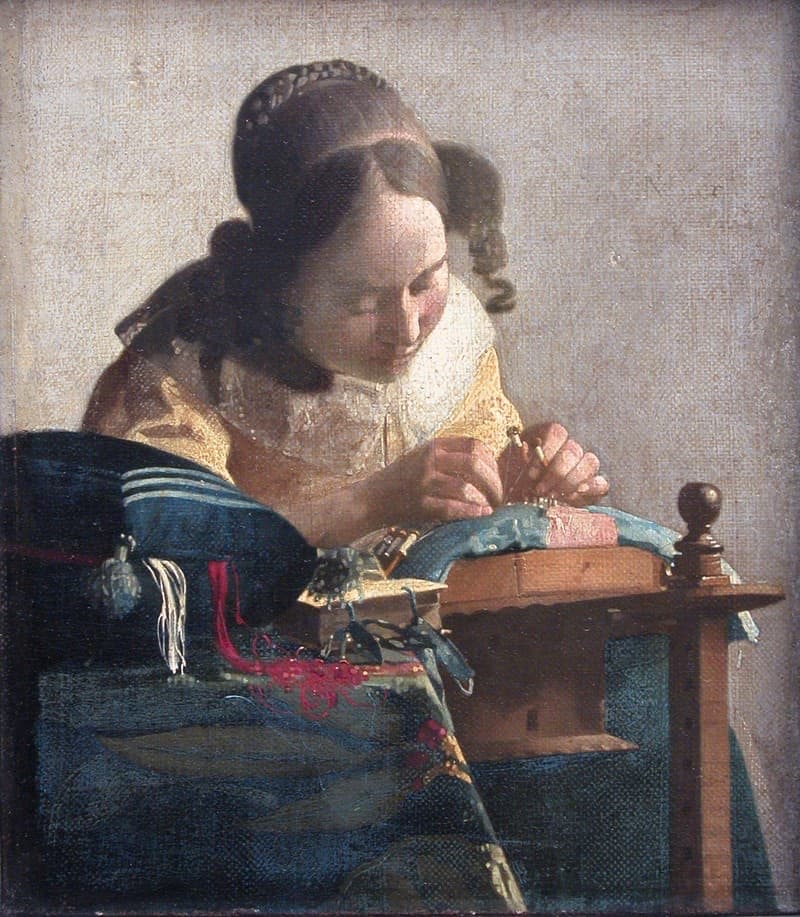
The Lacemaker
Johannes Vermeer, c. 1669-1670
Vermeer's smallest painting shows a young woman absorbed in intricate needlework. Her concentration on the delicate threads represents quiet satisfaction in skilled labor. The Joyous (Dui) relates to contentment from within—her calm focus on craftsmanship reflects inward pleasure rather than external stimulation.
Wilhelm Commentary
Richard Wilhelm's classic translation and interpretation
The Judgment
The joyous mood is infectious and therefore brings success. But joy must be based on steadfastness if it is not to degenerate into uncontrolled mirth. Truth and strength must dwell in the heart, while gentleness reveals itself in social intercourse. In this way one assumes the right attitude toward God and man and achieves something. Under certain conditions, intimidation without gentleness may achieve something momentarily, but not for all time. When, on the other hand, the hearts of men are won by friendliness, they are led to take all hardships upon themselves willingly, and if need be will not shun death itself, so great is the power of joy over men.
The Image
A lake evaporates upward and thus gradually dries up; but when two lakes are joined they do not dry up so readily, for one replenishes the other. It is the same in the field of knowledge. Knowledge should be a refreshing and vitalizing force. It becomes so only through stimulating intercourse with congenial friends with whom one holds discussion and practices application of the truths of life. In this way learning becomes many-sided and takes on a cheerful lightness, whereas there is always something ponderous and one-sided about the learning of the self-taught.
First (Bottom) Line
A quiet, wordless, self-contained joy, desiring nothing from without and resting content with everything, remains free of all egotistic likes and dislikes. In this freedom lies good fortune, because it harbors the quiet security of a heart fortified within itself.
Second Line
We often find ourselves associating with inferior people in whose company we are tempted by pleasures that are inappropriate for the superior man. To participate in such pleasures would certainly bring remorse, for a superior man can find no real satisfaction in low pleasures. When, recognizing this, a man does not permit his will to swerve, so that he does not find such ways agreeable, not even dubious companions will venture to proffer any base pleasures, because he would not enjoy them. Thus every cause for regret is removed.
Third Line
True joy must spring from within. But if one is empty within and wholly given over to the world, idle pleasures come streaming in from without. This is what many people welcome as diversion. Those who lack inner stability and therefore need amusement, will always find opportunity of indulgence. They attract external pleasures by the emptiness of their natures. Thus they lose themselves more and more, which of course has bad results.
Fourth Line
Often a man finds himself weighing the choice between various kinds of pleasures, and so long as he has not decided which kind he will choose, the higher or the lower, he has no inner peace. Only when he clearly recognizes that passion brings suffering, can he make up his mind to turn away from the lower pleasures and to strive for the higher. Once this decision is sealed, he finds true joy and peace, and inner conflict is overcome.
Fifth Line
Dangerous elements approach even the best of men. If a man permits himself to have anything to do with them, their disintegrating influence acts slowly but surely, and inevitable brings dangers in its train. But if he recognizes the situation and can comprehend the danger, he knows how to protect himself and remains unharmed.
Sixth (Top) Line
A vain nature invites diverting pleasures and must suffer accordingly (cf. the six in the third place). If a man is unstable within, the pleasures of the world that he does not shun have so powerful an influence that he is swept along by them. Here it is no longer a question of danger, of good fortune or misfortune. He has given up direction of his own life, and what becomes of him depends upon chance and external influences.