渙
Huàn — Dispersion
upper trigram
巽Wind (Penetrating)lower trigram
坎Water (Danger)The Judgment
亨。王假有廟。利涉大川。利貞。
Character-by-character gloss
Modern Interpretation
Success. The king approaches his temple. It furthers one to cross the great water. Persistence furthers. When vital energy is dammed up within, gentleness serves to break up and dissolve the blockage. Religious forces are needed to overcome the egotism that divides people. Sacred rites and music arouse a strong tide of emotion shared by all hearts in unison, awakening consciousness of the common origin of all creatures. In this way disunity is overcome and rigidity dissolved. Cooperation in great undertakings sets a high goal for the will of the people; in the common concentration on this goal, all barriers dissolve.
The Image
風行水上,渙。先王以享於帝,立廟。
Character-by-character gloss
Modern Interpretation
The wind drives over the water. The kings of old sacrificed to the Lord and built temples. In autumn and winter, water begins to freeze into ice. When the warm breezes of spring come, the rigidity is dissolved and elements dispersed in ice floes are reunited. It is the same with the minds of people. Through hardness and selfishness, the heart grows rigid, leading to separation from all others. The hearts of people must be seized by a devout emotion, shaken by religious awe in face of eternity, united through the strong feeling of fellowship.
「風行水上,渙。」冬天的冰,春風一來就化了。人心的僵硬也是這樣——需要溫暖的東西去融化它。古人說「先王以享於帝,立廟」,用的是宗教的方式。但核心的意思大概是:人需要被某種比自己更大的東西觸動,才會放下那些小小的堅持。
The Six Lines
First (Bottom) Line
初六 用拯馬壯吉。
Modern Interpretation
He brings help with the strength of a horse. Good fortune. It is important that disunion should be overcome at the outset, before it has become complete—that the clouds be dispersed before they have brought storm and rain. At such times, take quick and vigorous action to dissolve misunderstandings and mutual distrust.
Second Line
九二 渙奔其机。悔亡。
Modern Interpretation
At the dissolution he hurries to that which supports him. Remorse disappears. When you discover within yourself the beginnings of alienation from others, of misanthropy and ill humor, set about dissolving these obstructions. Rouse yourself inwardly, hasten to that which supports you. Such support is never found in hatred, but always in moderate and just judgment of others, linked with good will.
Third Line
六三 渙其躬。无悔。
Modern Interpretation
He dissolves his self. No remorse. Under certain circumstances, your work may become so difficult that you can no longer think of yourself. Set aside all personal desires and disperse whatever the self gathers about it to serve as a barrier against others. Only on the basis of great renunciation can you obtain the strength for great achievements.
Fourth Line
六四 渙其羣元吉。渙有丘。匪夷所思。
Modern Interpretation
He dissolves his bond with his group. Supreme good fortune. Dispersion leads in turn to accumulation—something ordinary people do not think of. When working at a task that affects the general welfare, leave all private friendships out of account. Only by rising above party interests can you achieve something decisive. He who has the courage to forego what is near wins what is afar.
Fifth Line
九五 渙汗其大號。渙。王居无咎。
Modern Interpretation
His loud cries are as dissolving as sweat. Dissolution! A king abides without blame. In times of general dispersion and separation, a great idea provides a focal point for the organization of recovery. Just as an illness reaches its crisis in a dissolving sweat, so a great stimulating idea is true salvation in times of general deadlock. It gives the people a rallying point.
Sixth (Top) Line
上九 渙其血。去逖出。无咎。
Modern Interpretation
He dissolves his blood. Departing, keeping at a distance, going out, is without blame. The dissolving of that which might lead to bloodshed and wounds—avoidance of danger. But here the thought is not that you avoid difficulties for yourself alone, but rather that you rescue your kin, helping them to get away before danger comes, or to keep at a distance from an existing danger, or to find a way out. In this way you do what is right.
Yilin Verse
From the Forest of Changes (焦氏易林) — 渙 Huàn (Dispersion)
望幸不到,文章未就。王子逐兔,犬踦不得。
The dragon is painted but the eye is not dotted; the poem is complete but missing its final line. Wind scatters the wet ink — only smudges remain on the paper.
Full explanation
Wind over water, returning to itself — Dispersion into Dispersion. The original verse captures incompletion at every level: the hoped-for audience never arrives, the literary work remains unfinished. A prince chases a rabbit, but his dog stumbles and the prey escapes. Each image is of effort that falls just short, the final stroke never delivered. Wind over water, dispersing what was already dispersed — the condition is recursive, an endless loop of dissolution. From Dispersion to Dispersion, there is no transformation, no resolution: the dragon painted without its pupils, the poem missing its last line, the ink blown across the page by the very wind that should have dried it. This is the hexagram contemplating its own nature: the permanent condition of things never quite coming together.
Masterpiece
A work of art reflecting this hexagram's essence
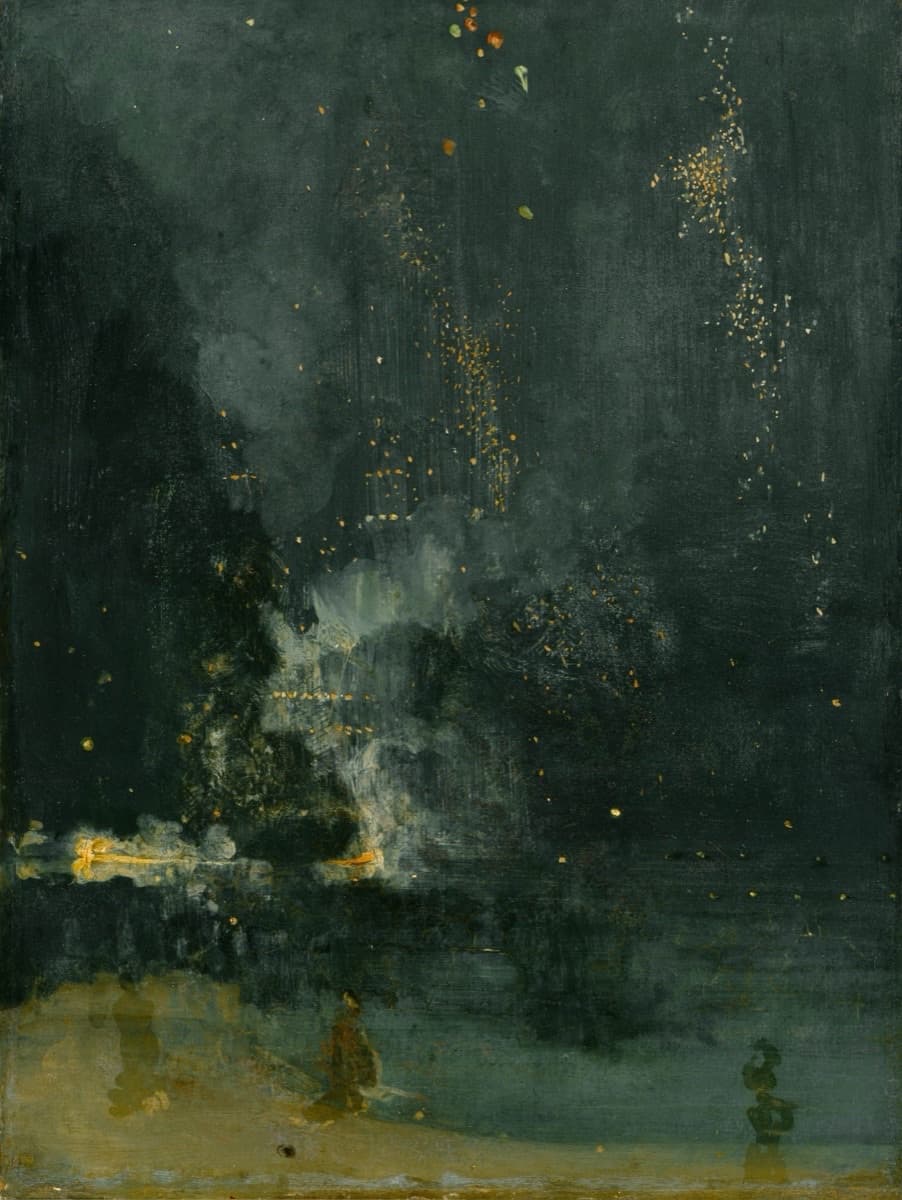
Nocturne in Black and Gold
Whistler, Unknown
Whistler's nocturne abstracts fireworks at Cremorne Gardens into dissolving atmospheric effects. Forms scatter and blur into darkness, boundaries dispersing. Dispersion (Huan) describes dissolution of rigid structures—here paint itself disperses into mist, solid forms giving way to atmospheric diffusion.
Wilhelm Commentary
Richard Wilhelm's classic translation and interpretation
The Judgment
The text of this hexagram resembles that of Ts'ui, GATHERING TOGETHER (45). In the latter, the subject is the bringing together of elements that have been separated, as water collects in lakes upon the earth. Here the subject is the dispersing and dissolving of divisive egotism. DISPERSION shows the way, so to speak, that leads to gathering together. This explains the similarity of the two texts. Religious forces are needed to overcome the egotism that divides men. The common celebration of the great sacrificial feasts and sacred rites, which gave expression simultaneously to the interrelation and social articulation of family and state, was the means of employed by the great rulers to unite men. The sacred music and the splendor of the ceremonies aroused a strong tide of emotion that was shared by all hearts in unison, and that awakened a consciousness of the common origin of all creatures. In this way disunity was overcome and rigidity dissolved. A further means to the same end is co-operation in great general undertakings that set a high goal for the will of the people; in the common concentration on this goal, all barriers dissolve, just as, when a boat is crossing a great stream, all hands must unite in a joint task. But only a man who is himself free of all selfish ulterior considerations, and who perseveres in justice and steadfastness, is capable of so dissolving the hardness of egotism.
The Image
In the autumn and winter, water begins to freeze into ice. When the warm breezes of spring come, the rigidity is dissolved, and the elements that have been dispersed in ice floes are reunited. It is the same with the minds of the people. Through hardness and selfishness the heart grows rigid, and this rigidity leads to separation from all others. Egotism and cupidity isolate men. Therefore the hearts of men must be seized by a devout emotion. They must be shaken by a religious awe in face of eternity–stirred with an intuition of the One Creator of all living beings, and united through the strong feeling of fellowship experienced in the ritual of divine worship.
First (Bottom) Line
It is important that disunion should be overcome at the outset, before it has become complete–that the clouds should be dispersed before they have brought storm and rain. At such times when hidden divergences in temper make themselves felt and lead to mutual misunderstandings we must take quick and vigorous action to dissolve the misunderstandings and mutual distrust.
Second Line
When an individual discovers within himself the beginnings of alienation from others, of misanthropy and ill humor, he must set about dissolving these obstructions. He must rouse himself inwardly, hasten to that which supports him. Such support is never found in hatred, but always in a moderate and just judgment of men, linked with good will. If he regains this unobstructed outlook on humanity, while at the same time all saturnine ill humor is dissolved, all occasion for remorse disappears.
Third Line
Under certain circumstances, a man's work may become so difficult that he can no longer think of himself. He must set aside all personal desires and disperse whatever the self gathers about it to serve as a barrier against others. Only on the basis of a great renunciation can he obtain the strength for great achievements. By setting his goal in a great task outside himself, he can attain this standpoint.
Fourth Line
When we are working at a task that affects the general welfare, we must leave all private friendships out of account. Only by rising above party interests can we achieve something decisive. He who has the courage thus to forego what is near wins what is afar. But in order to comprehend this standpoint, one must have a wide view of the interrelationships of life, such as only unusual men attain.
Fifth Line
In times of general dispersion and separation, a great idea provides a focal point for the organization of recovery. Just as an illness reaches its crisis in a dissolving sweat, so a great stimulating idea is a true salvation in times of general deadlock. It gives the people a rallying point–a man in a ruling position who can dispel misunderstandings.
Sixth (Top) Line
The idea of the dissolving of a man's blood means the dispersion of that which might lead to bloodshed and wounds, i. e. , avoidance of danger. But here the thought is not that a man avoids difficulties for himself alone, but rather that he rescues his kin–helps them to get away before danger comes, or to keep at a distance from an existing danger, or to find a way out of a danger that is already upon them. In this way he does what is right.