小過
Xiǎo Guò — Preponderance of the Small
upper trigram
震Thunder (Movement)lower trigram
艮Mountain (Stillness)The Judgment
亨。利貞。可小事。不可大事。飛鳥遺之音。不宜上宜下。大吉。
Character-by-character gloss
Modern Interpretation
Success. Persistence furthers. Small things may be done; great things should not be done. The flying bird brings the message: It is not well to strive upward, it is well to remain below. Great good fortune. Exceptional modesty and conscientiousness are sure to be rewarded with success; however, it is important that they should not become empty form and subservience but be combined always with correct dignity in personal behavior. We must understand the demands of the time to find the necessary offset for its deficiencies. We must not count on great success, since the requisite strength is lacking. A bird should not try to surpass itself and fly into the sun; it should descend to the earth, where its nest is.
The Image
山上有雷,小過。君子以行過乎恭,喪過乎哀,用過乎儉。
Character-by-character gloss
Modern Interpretation
Thunder on the mountain. In conduct, give preponderance to reverence. In bereavement, give preponderance to grief. In expenditures, give preponderance to thrift. Thunder on the mountain seems much nearer than thunder on the plain. Thus you must always fix your eyes more closely and more directly on duty than does the ordinary person, even though this might make your behavior seem petty to the outside world. You are exceptionally conscientious in actions. In bereavement, emotion means more than ceremoniousness. In personal expenditures, you are extremely simple and unpretentious.
「山上有雷,小過。」山上的雷聽起來比平地的近,聲音更直接。君子從這裡學到:比一般人更緊盯著自己的責任,即使看起來有點瑣碎。行為上格外認真,在喪事中真情比儀式重要,在花費上格外簡樸。這些做法看起來與眾不同,但重點在於:在外在事物上,站在低處那一邊。
The Six Lines
First (Bottom) Line
初六 飛鳥以凶。
Modern Interpretation
The bird meets with misfortune through flying. A bird ought to remain in the nest until it is fledged. If it tries to fly before this, it invites misfortune. Extraordinary measures should be resorted to only when all else fails. At first, put up with traditional ways as long as possible; otherwise you exhaust yourself and still achieve nothing.
Second Line
六二 過其祖。遇其妣。不及其君。遇其臣。无咎。
Modern Interpretation
She passes by her ancestor and meets her ancestress. He does not reach his prince and meets the official. No blame. This unusual behavior is an expression of modesty. She ventures to approach the ancestress, for she feels related to her by common sex. Hence here deviation from the rule is not a mistake. Another image: the official who conscientiously fulfills duty, taking place among other officials. This extraordinary restraint is likewise not a mistake in exceptional times.
Third Line
九三 弗過防之。從或戕之。凶。
Modern Interpretation
If one is not extremely careful, somebody may come up from behind and strike. Misfortune. At certain times extraordinary caution is absolutely necessary. But upright and strong personalities who are conscious of being in the right disdain to hold themselves on guard because they consider it petty. This self-confidence deludes them. There are dangers lurking for which they are unprepared. Such danger is not unavoidable; one can escape it if one understands that the time demands attention to small and insignificant things.
Fourth Line
九四 无咎。弗過遇之。往厲必戒。勿用永貞。
Modern Interpretation
No blame. He meets him without passing by. Going brings danger. One must be on guard. Do not act. Be constantly persevering. Hardness of character is tempered by yielding position so that no mistakes are made. The situation calls for extreme caution; one must make no attempt of one's own initiative to reach the desired end. Going on would bring danger. Therefore, be on guard and not act but continue inwardly to persevere.
Fifth Line
六五 密雲不雨。自我西郊。公弋取彼在穴。
Modern Interpretation
Dense clouds, no rain from our western territory. The prince shoots and hits him who is in the cave. In exceptional times there may be a born ruler qualified to set the world in order, but who cannot achieve anything or confer blessing because they stand alone and have no helpers. In such times you must seek out helpers with whose aid you can carry out the task. But these helpers must be modestly sought out in the retirement to which they have withdrawn. It is not their fame but their genuine achievements that are important.
Sixth (Top) Line
上六 弗遇過之。飛鳥離之。凶。是謂災眚。
Modern Interpretation
He passes him by, not meeting him. The flying bird leaves him. Misfortune. This means bad luck and injury. If one overshoots the goal, one cannot hit it. If a bird will not come to its nest but flies higher and higher, it eventually falls into the hunter's net. He who in times of preponderance of small things does not know how to call a halt, but restlessly seeks to press on and on, draws upon himself misfortune at the hands of gods and men, because he deviates from the order of nature.
Yilin Verse
From the Forest of Changes (焦氏易林) — 小過 Xiǎo Guò (Small Exceeding)
初雖驚惶,後反无傷,受其福慶。
At first, though alarmed and frightened; afterward, no harm comes; receiving blessings and good fortune.
Full explanation
Thunder rumbles above the mountain, returning to itself. At first there is alarm and fright, but afterward no harm comes — blessings and good fortune are received. The verse captures Small Exceeding's own nature in its purest form: the initial shock of exceeding one's proper bounds, followed by the discovery that the excess was benign all along. The thunder startles but does not strike; the mountain shakes but does not fall. When source and target are identical, the hexagram speaks to itself, revealing its core teaching: small transgressions, handled with humility, resolve into benefit rather than punishment. The bird that flies slightly too high discovers it can see farther. The one who bows too deeply earns unexpected respect. Excess in the direction of caution becomes its own reward.
Masterpiece
A work of art reflecting this hexagram's essence
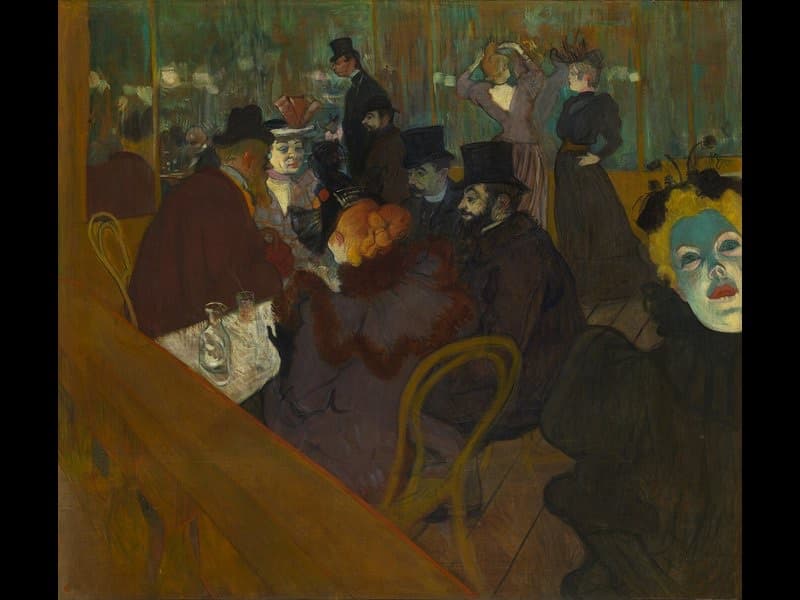
At the Moulin Rouge
Toulouse-Lautrec, 1892
Toulouse-Lautrec captured Paris nightlife at the Moulin Rouge cabaret. Figures crowd around tables in the famous dance hall, illuminated by harsh electric light. Preponderance of the Small (Xiao Guo) concerns attending to minor matters—the painting documents fleeting social moments and marginal figures rather than grand historical events.
Wilhelm Commentary
Richard Wilhelm's classic translation and interpretation
The Judgment
Exceptional modesty and conscientiousness are sure to be rewarded with success; however, if a man is not to throw himself away, it is important that they should not become empty form and subservience but be combined always with a correct dignity in personal behavior. We must understand the demands of the time in order to find the necessary offset for its deficiencies and damages. In any event we must not count on great success, since the requisite strength is lacking. In this lies the importance of the message that one should not strive after lofty things but hold to lowly things. The structure of the hexagram gives rise to the idea that this message is brought by a bird. In Ta Kuo, PREPONDERANCE OF THE GREAT (28), the four strong, heavy lines within, supported only by two weak lines without, give the image of a sagging ridgepole. Here the supporting weak lines are both outside and preponderant; this gives the image of a soaring bird. But a bird should not try to surpass itself and fly into the sun; it should descend to the earth, where its nest is. In this way it gives the message conveyed by the hexagram.
The Image
Thunder on the mountain is different from thunder on the plain. In the mountains, thunder seems much nearer; outside the mountains, it is less audible than the thunder of an ordinary storm. Thus the superior man derives an imperative from this image: he must always fix his eyes more closely and more directly on duty than does the ordinary man, even though this might make his behavior seem petty to the outside world. He is exceptionally conscientious in his actions. In bereavement emotion means more to him than ceremoniousness. In all his personal expenditures he is extremely simple and unpretentious. In comparison with the man of the masses, all this makes him stand out as exceptional. But the essential significance of his attitude lies in the fact that in external matters he is on the side of the lowly.
First (Bottom) Line
A bird ought to remain in the nest until it is fledged. If it tries to fly before this, it invites misfortune. Extraordinary measures should be resorted to only when all else fails. At first we ought to put up with traditional ways as long as possible; otherwise we exhaust ourselves and our energy and still achieve nothing.
Second Line
Two exceptional situations are instanced here. In the temple of ancestors, where alternation of generations prevails, the grandson stands on the same side as the grandfather. Hence his closest relations are with the grandfather. The present line designates the grandson's wife, who during the sacrifice passes by the ancestor and goes toward the ancestress. This unusual behavior is, however, an expression of her modesty. She ventures rather to approach the ancestress, for she feels related to her by their common sex. Hence here deviation from the rule is not a mistake. Another image is that of the official who, in compliance with regulation, first seeks an audience with his prince. If he is not successful in this, he does not try to force anything but goes about conscientious fulfillment of his duty, taking his place among the other officials. This extraordinary restraint is likewise not a mistake in exceptional times. (The rule is that every official should first have an audience with the prince by whom he is appointed. Here the appointment is made by the minister. )
Third Line
At certain times extraordinary caution is absolutely necessary. But it is just in such life situations that we find upright and strong personalities who, conscious of being in the right, disdain to hold themselves on guard, because they consider it petty. Instead, they go their way proud and unconcerned. But this self-confidence deludes them. There are dangers lurking for which they are unprepared. Yet such danger is not unavoidable; one can escape it if he understands that the time demands that he pay especial attention to small and insignificant things.
Fourth Line
Hardness of character is tempered by yielding position so that no mistakes are made. The situation here calls for extreme caution; one must make no attempt of one's own initiative to reach the desired end. And if one were to go on, endeavoring to force his way to the goal, he would be endangered. Therefore one must be on guard and not act but continue inwardly to persevere.
Fifth Line
As a high place is pictured here, the image of a flying bird has become that of flying clouds. But dense as the clouds are, they race across the sky and give no rain. Similarly, in exceptional times there may be a born ruler who is qualified to set the world in order, but who cannot achieve anything or confer blessing on the people because he stands alone and has no helpers. Is such times a man must seek out helpers with whose aid he can carry out the task. But these helpers must be modestly sought out in the retirement to which they have withdrawn. It is not their fame nor their great names but their genuine achievements that are important. Through such modesty the right man is found, and the exceptional task is carried out in spite of all difficulties.
Sixth (Top) Line
If one overshoots the goal, one cannot hit it. If a bird will not come to its nest but flies higher and higher, it eventually falls into the hunter's net. He who in times of extraordinary salience of small things does not know how to call a halt, but restlessly seeks to press on and on, draws upon himself misfortune at the hands of gods and men, because he deviates from the order of nature.