坎
Kǎn — The Abyss
upper trigram
坎Water (Danger)lower trigram
坎Water (Danger)The Judgment
習坎。有孚。維心亨。行有尚。
Character-by-character gloss
Modern Interpretation
Danger doubled—this is the situation, not your attitude. Sincerity in the heart leads to success. Whatever you do works when inner truth guides action. Water teaches the lesson: flow continuously, fill every depression completely, never shrink from plunging through. Thoroughness and forward movement—these prevent perishing in danger.
The Image
水洊至習坎。君子以常德行,習教事。
Character-by-character gloss
Modern Interpretation
Water flows on without stopping, reaching its goal. The person of character makes virtue consistent, not occasional, and teaches through repetition. Constancy in danger, constancy in teaching. The pattern holds.
「水洊至」——水不停地流,終究到達目的。君子因此「常德行,習教事」。德行要持續,不是偶爾;教導要重複,才能入心。危險中的一致性,教學中的一致性。模式是一樣的。
The Six Lines
First (Bottom) Line
初六 習坎。入于坎窞。凶。
Modern Interpretation
Falling into a pit within the abyss. Double danger through familiarity. You've grown used to what's dangerous, allowed it to become part of you. This is the beginning of real misfortune.
Second Line
九二 坎有險。求小得。
Modern Interpretation
The abyss has danger. Seek only small gains now. You cannot escape immediately—don't try. Hold position, don't be overwhelmed. Like a spring that tarries before finding its way into the open, accept the constraint.
Third Line
六三 來之坎坎。險且枕。入于坎窞。勿用。
Modern Interpretation
Forward is abyss, backward is abyss. Pause. Wait. Every movement leads into danger. Escape is impossible right now. Acting from frustration only bogs you deeper. Remain until a way shows itself.
Fourth Line
六四 樽酒簋貳。用缶。納約自牖。終无咎。
Modern Interpretation
A jug of wine, a bowl of rice, earthen vessels passed through the window. Sincerity in danger, simplicity under pressure. Formalities drop away; what matters is the honest intention of mutual help. No blame in this.
Fifth Line
九五 坎不盈。祗既平。无咎。
Modern Interpretation
The abyss fills to the rim but not beyond. The way out is the line of least resistance. Water doesn't rise higher than necessary. Great labors can't happen now—just get out of the danger. That's enough.
Sixth (Top) Line
上六 係用徽纆。寘于叢棘。三歲不得。凶。
Modern Interpretation
Bound and imprisoned, thorns on every side. For three years, lost. This is the culmination of wrong turns—entangled completely, no prospect of escape. The path disappeared long ago.
Yilin Verse
From the Forest of Changes (焦氏易林) — 坎 Kǎn (Abysmal Water)
有黃鳥足,歸呼季玉。從我睢陽,可辟刀兵。與福俱行,有命久長。
There is a yellow bird with legs; it calls, summoning Jiyu. Follow me to Suiyang; there one may avoid war and weapons. Walking together with blessings; life shall be long.
Full explanation
Water upon water, the doubled abyss turns inward upon itself. A golden-footed bird appears — evoking the Yellow Bird of the Shijing — and calls out for Jiyu, summoning a companion home. Follow me to Suiyang, the verse counsels, where one may avoid the blades of war. Walk alongside blessings, and life shall be long. Suiyang is the hometown of Jiao Gan, the Yilin's own author; this self-referential note grounds the oracle in the diviner's personal geography. From The Abysmal returning to itself, the message is that within repeated danger lies a fixed center — a home one can return to, a place where even the abyss yields safety to those who know where to stand.
Masterpiece
A work of art reflecting this hexagram's essence
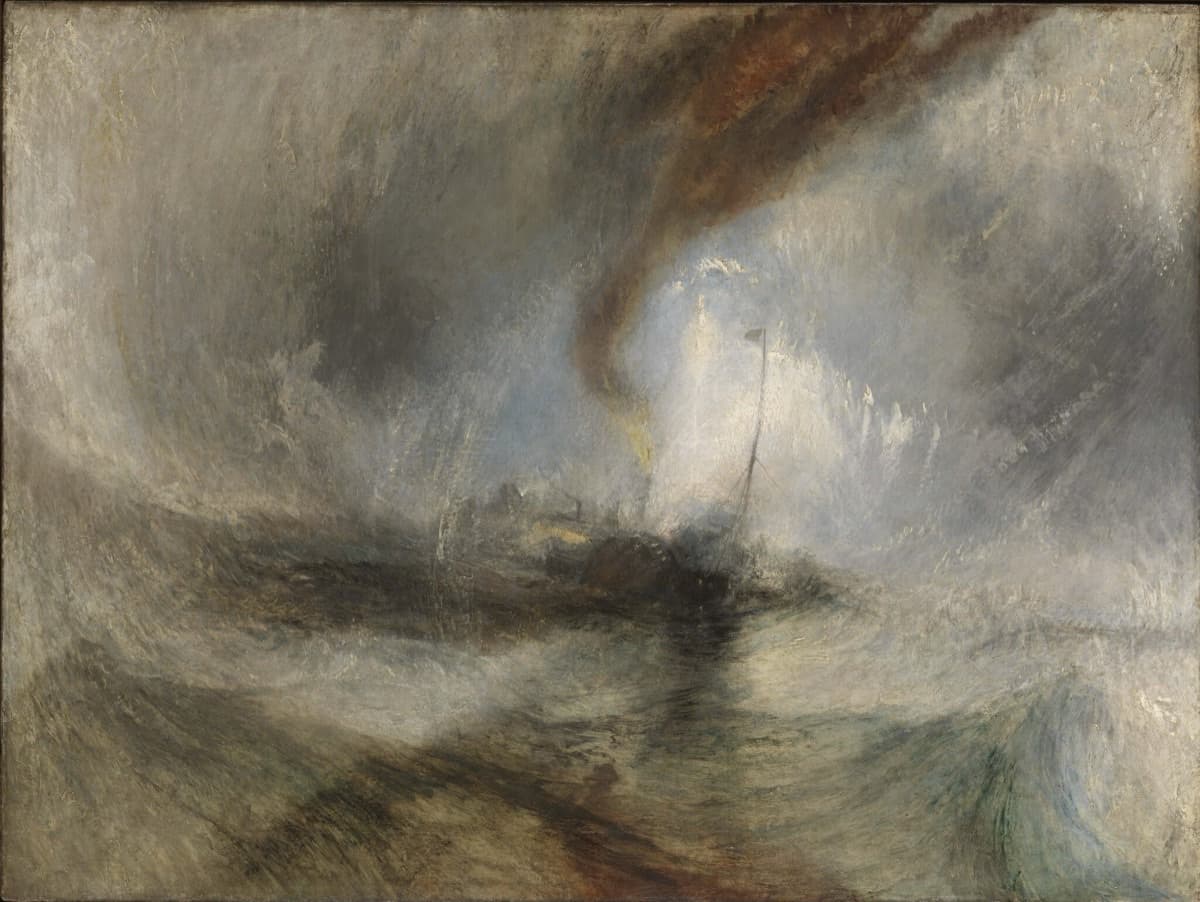
Snow Storm Steam Boat
Turner, Unknown
Turner's vortex of sea, snow, and steam depicts a paddle-steamer caught in a violent storm off Harwich. The swirling composition places the viewer within the chaos of water and wind, with the vessel barely visible at the center. This captures the hexagram's theme of the Abysmal—repeated danger, water upon water, the need to flow through peril rather than resist it.
Wilhelm Commentary
Richard Wilhelm's classic translation and interpretation
The Judgment
Through repetition of danger we grow accustomed to it. Water sets the example for the right conduct under such circumstances. It flows on and on, and merely fills up all the places through which it flows; it does not shrink from any dangerous spot nor from any plunge, and nothing can make it lose its own essential nature. It remains true to itself under all conditions. Thus likewise, if one is sincere when confronted with difficulties, the heart can penetrate the meaning of the situation. And once we have gained inner mastery of a problem, it will come about naturally that the action we take will succeed. In danger all that counts is really carrying out all that has to be done–thoroughness–and going forward, in order not to perish through tarrying in the danger. Properly used, danger can have an important meaning as a protective measure. Thus heaven has its perilous height protecting it against every attempt at invasion, and earth has its mountains and bodies of water, separating countries by their dangers. Thus also rulers make use of danger to protect themselves against attacks from without and against turmoil within.
The Image
Water reaches its goal by flowing continually. It fills up every depression before it flows on. The superior man follows its example; he is concerned that goodness should be an established attribute of character rather than an accidental and isolated occurrence. So likewise in teaching others everything depends on consistency, for it is only through repetition that the pupil makes the material his own.
First (Bottom) Line
By growing used to what is dangerous, a man can easily allow it to become part of him. He is familiar with it and grows used to evil. With this he has lost the right way, and misfortune is the natural result.
Second Line
When we are in danger we ought not to attempt to get out of it immediately, regardless of circumstances; at first we must content ourselves with not being overcome by it. We must calmly weigh the conditions of the time and be satisfied with small gains, because for the time being a great success cannot be attained. A spring flows only sparingly at first, and tarries for some time before it makes its way into the open.
Third Line
Here every step, forward or backward, leads into danger. Escape is out of the question. Therefore we must not be misled into action, as a result of which we should only bog down deeper in the danger; disagreeable as it may be to remain in such a situation, we must wait until a way out shows itself.
Fourth Line
In times of danger ceremonious forms are dropped. What matters most is sincerity. Although as a rule it is customary for an official to present certain introductory gifts and recommendations before he is appointed, here everything is simplified to the utmost. The gifts are insignificant, there is no one to sponsor him, he introduces himself; yet all this need not be humiliating if only there is the honest intention of mutual help in danger. Still another idea is suggested. The window is the place through which light enters the room. If in difficult times we want to enlighten someone, we must begin with that which is in itself lucid and proceed quite simply from that point on.
Fifth Line
Danger comes because one is too ambitious. In order to flow out of a ravine, water does not rise higher than the lowest point of the rim. So likewise a man when in danger has only to proceed along the line of least resistance; thus he reaches the goal. Great labors cannot be accomplished in such times; it is enough to get out of the danger.
Sixth (Top) Line
A man who in the extremity of danger has lost the right way and is irremediably entangled in his sins has no prospect of escape. He is like a criminal who sits shackled behind thorn hedged prison walls.