大過
Dà Guò — Great Exceeding
upper trigram
兌Lake (Joyful)lower trigram
巽Wind (Penetrating)The Judgment
棟撓。利有攸往。亨。
Character-by-character gloss
Modern Interpretation
The ridgepole sags. The structure is under too much stress—strong in the middle, weak at the ends. This cannot last. Transition is needed immediately. Find somewhere to go. Success comes only through movement; staying put means collapse.
The Image
澤滅木,大過。君子以獨立不懼,遁世無悶。
Character-by-character gloss
Modern Interpretation
The lake rises above the trees. Extraordinary times. The person of character stands alone without concern, renounces the world without bitterness. When normal structures fail, individual integrity becomes everything.
澤滅木——湖水漲過了樹頂。這是暫時的。君子因此「獨立不懼,遁世無悶」。一個人站著,不害怕;放棄世俗,不苦悶。當正常結構失效的時候,個人的完整性就變成唯一的依靠。
The Six Lines
First (Bottom) Line
初六 藉用白茅。无咎。
Modern Interpretation
Spread white rushes beneath. Extreme caution for extraordinary undertaking. This carefulness looks excessive but isn't wrong. Exceptional ventures fail without exceptional attention to foundations.
Second Line
九二 枯楊生稊。老夫得其女妻。无不利。
Modern Interpretation
The dry poplar sprouts at the root. An older man takes a young wife. Everything works despite appearances. Alliance with what is humble and vital creates renewal. In crisis, connecting with basics creates possibility.
Third Line
九三 棟橈。凶。
Modern Interpretation
The ridgepole breaks. The structure fails. This is misfortune. You insisted on pushing forward when the supports couldn't hold. Refusing counsel, accepting no help—now the weight crashes through.
Fourth Line
九四 棟隆。吉。有它吝。
Modern Interpretation
The ridgepole is braced. Good fortune—unless your motives are impure. Through connection with those below, you stabilize the situation. But if you use these connections for personal power, shame follows.
Fifth Line
九五 枯楊生華。老婦得其士夫。无咎无譽。
Modern Interpretation
The withered poplar flowers. The old woman takes a husband. Neither blame nor praise. Flowering exhausts the tree; the marriage produces nothing new. The form is maintained but the substance is spent.
Sixth (Top) Line
上六 過涉滅頂。凶。无咎。
Modern Interpretation
Wading through water that rises over your head. Misfortune, but no blame. You undertake what must be done regardless of personal cost. Some things matter more than survival. This is one of them.
Yilin Verse
From the Forest of Changes (焦氏易林) — 大過 Dà Guò (Great Exceeding)
典冊法書,藏閣蘭臺。雖遭亂潰,獨不遇災。
Classic scrolls and legal texts; stored in the Orchid Terrace archive. Though they met with turmoil and ruin; alone they escaped disaster.
Full explanation
Great Exceeding returns to itself — lake over wind doubled, the ridgepole sagging but enduring. Canonical texts and legal records are stored in pavilions and the Lantai Archive. Though encountering chaos and collapse all around, they alone escape disaster. The Lantai (蘭臺) was the Han imperial archive where the dynasty's most precious documents were kept. The verse celebrates preservation through structure: even when everything else falls apart, the written word survives if properly housed. From Great Exceeding to Great Exceeding, there is no transformation — only the doubled weight of excess. Yet the verse finds a paradox within: the very archive that records excess also survives it. Knowledge, properly stored, outlasts the crises it documents.
Masterpiece
A work of art reflecting this hexagram's essence
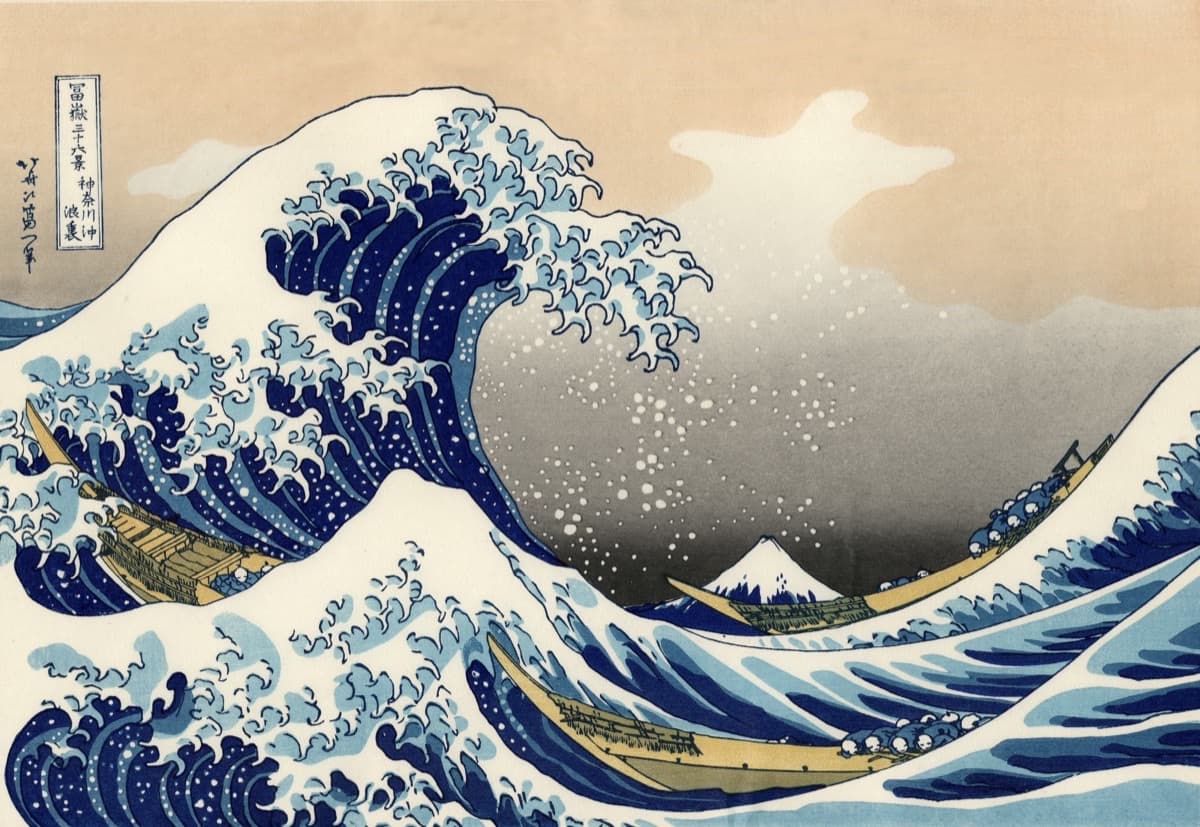
Great Wave
Hokusai, Unknown
Hokusai's famous woodblock print from the Thirty-six Views of Mount Fuji shows a massive wave cresting over boats, with Mount Fuji small in the distance. The wave's overwhelming force and the vulnerability of the boats beneath it illustrate the hexagram's theme of preponderance and critical moments when structures are tested beyond their limits.
Wilhelm Commentary
Richard Wilhelm's classic translation and interpretation
The Judgment
The weight of the great is excessive. The load is too heavy for the strength of the supports. The ridgepole on which the whole roof rests, sags to the breaking point, because its supporting ends are too weak for the load they bear. It is an exceptional time and situation; therefore extraordinary measures are demanded. It is necessary to find a way of transition as quickly as possible, and to take action. This promises success. For although the strong element is in excess, it is in the middle, that is, at the center of gravity, so that a revolution is not to be feared. Nothing is to be achieved by forcible measures. The problem must be solved by gentle penetration to the meaning of the situation (as is suggested by the attribute of the inner trigram, Sun); then the change-over to other conditions will be successful. It demands real superiority; therefore the time when the great preponderates is a momentous time.
The Image
Extraordinary times when the great preponderates are like flood times when the lake rises over the treetops. But such conditions are temporary. The two trigrams indicate the attitude proper to such exceptional times: the symbol of the trigram Sun is the tree, which stands firm even though it stands alone, and the attribute of Tui is joyousness, which remains undaunted even if it must renounce the world.
First (Bottom) Line
When a man wishes to undertake an enterprise in extraordinary times, he must be extraordinarily cautious, just as when setting a heavy thing down on the floor, one takes care to put rushes under it, so that nothing will break. This caution, though it may seem exaggerated, is not a mistake. Exceptional enterprises cannot succeed unless utmost caution is observed in their beginnings and in the laying of their foundations.
Second Line
Wood is near water; hence the image of an old poplar sprouting at the root. This means an extraordinary situation arises when an older man marries a young girl who suits him. Despite the unusualness of the situation, all goes well. From the point of view of politics, the meaning is that in exceptional times one does well to join with the lowly, for this affords a possibility of renewal.
Third Line
This indicates a type of man who in times of preponderance of the great insists on pushing ahead. He accepts no advice from others, and therefore they in turn are not willing to lend him support. Because of this the burden grows, until the structure of things bends or breaks. Plunging willfully ahead in times of danger only hastens the catastrophe.
Fourth Line
Through friendly relations with people of lower rank, a responsible man succeeds in becoming master of the situation. But if, instead of working for the rescue of the whole, he were to misuse his connections to obtain personal power and success, it would lead to humiliation.
Fifth Line
A withered poplar that flowers exhausts its energies thereby and only hastens its end. An older woman may marry once more, but no renewal takes place. Everything remains barren. Thus, though all the amenities are observed, the net result is only the anomaly of the situation. Applied to politics, the metaphor means that if in times of insecurity we give up alliance with those below us and keep up only the relationships we have with people of higher rank, an unstable situation is created.
Sixth (Top) Line
Here is a situation in which the unusual has reached a climax. One is courageous and wishes to accomplish one's task, no matter what happens. This leads into danger. The water rises over one's head. This is the misfortune. But one incurs no blame in giving up one's life that the good and the right may prevail. There are things that are more important than life.